DENARASE®- Precision Nuclease for Cleaner Bioprocessing

SKU:BHZ16500001
Best Seller Featured GMP Available Peer-Reviewed Free Sample
Promotion
Overview
Click light‑blue chips for details
Products for use in research and development & GMP For process development and GMP manufacturing of biologicals such as viral vectors and vaccines. Removing all forms of DNA and RNA, DENARASE® enhables a simpler, more efficient downstream process. DENARASE® GMP-grade is manufactured under EU GMP conditions DENARASE® R&D-grade is produced in conformity with the ISO 9001 standard, with less strict requirements regarding documentation, storage and distribution From a technical performance perspective, both quality grades are equal and the parameters on the specification are the same. This allows for a seamless transition from early R&D stage towards biopharmaceutical manufacturing under GMP.
Purity ≥ 99%
Activity > 250 U/µl​
Formulation Buffered aqueous glycerol solution
Storage Temperature -20°C
Options selector
Catalog no. Size Quality Grade
20804-100K 100 kU
20804-500K 500 kU
20804-1000K 1000 kU
20804-5000K 5000 kU
20804-1M 1 MU
20804-5M 5 MU
Available Options

Select the variant that best fits your experiment. Availability and lead time may vary by option.

  • Options (2 dimensions):
    • Grade (2) – R&D, GMP
    • Size (5) – 25 kU, 250 kU, 1,000 kU, 10,000 kU, 50,000 kU
  • Lead time: typically ships in 2–3 days; timing may vary by selected option.
  • Storage: Store at -20 °C ± 5 °C.
  • Shipping: cold-chain shipment (typically with ice packs).
  • Upon receipt: store at the recommended temperature as soon as possible.
  • Sales terms and conditions: Please review prior to ordering.
Field Specification
Concentration > 250 U/µL
Endotoxin Level < 0.25 EU/kU
Expression System
  • Recombinant, Bacillus sp. (gram-positive)
Form Liquid solution
Formulation Buffered aqueous glycerol solution
Product Type
  • Enzyme
  • Endonuclease
Protein Length Weight27 kDa (per monomer)
Purity ≥ 99%
Shipping Cold-chain shipment (typically with ice packs)
Source Recombinant, expressed in Bacillus sp.
Species Serratia marcescens
Storage −20 °C ± 5 °C
UniProt # P13717

About DENARASE®

How DENARASE® works

DENARASE® specifically hydrolyzes the phosphodiester bonds between nucleotides, leaving smaller fragments of around 3–5 base pairs. The enzyme is active on all forms of nucleic acids including single-stranded, double-stranded, linear, circular, or supercoiled. Best results are obtained when the enzyme is added before the release of DNA.


Production of DENARASE®

DENARASE® has been developed for use in commercial manufacturing processes of biologicals and complies with EU GMP regulations. The production process uses a gram-positive Bacillus sp. production host, which minimizes the risks of endotoxins in the product. No antibiotics, Triton X-100, materials with TSE/BSE risk, or raw materials of animal origin are employed in the manufacture of the product.


DENARASE® is available in two quality grades

DENARASE® for Research and Development (R&D) use & DENARASE® for manufacturing under GMP.

  • DENARASE® R&D-grade is produced in conformity with the ISO 9001 standard, with less strict requirements regarding documentation, storage, and distribution.
  • DENARASE® GMP-grade is manufactured under EU GMP conditions.
  • From a technical performance perspective, both quality grades are equal and the parameters on the specification are the same. This allows for a seamless transition from early R&D stage towards biopharmaceutical manufacturing under GMP.
  • In order to avoid mix-ups, packaging units of the same size are indicated differently in the product name of the two quality standards: 1,000 / 5,000 kU for R&D-grade DENARASE® and 1 / 5 MU for GMP-grade DENARASE®.


DENARASE® — Enzyme Characteristics

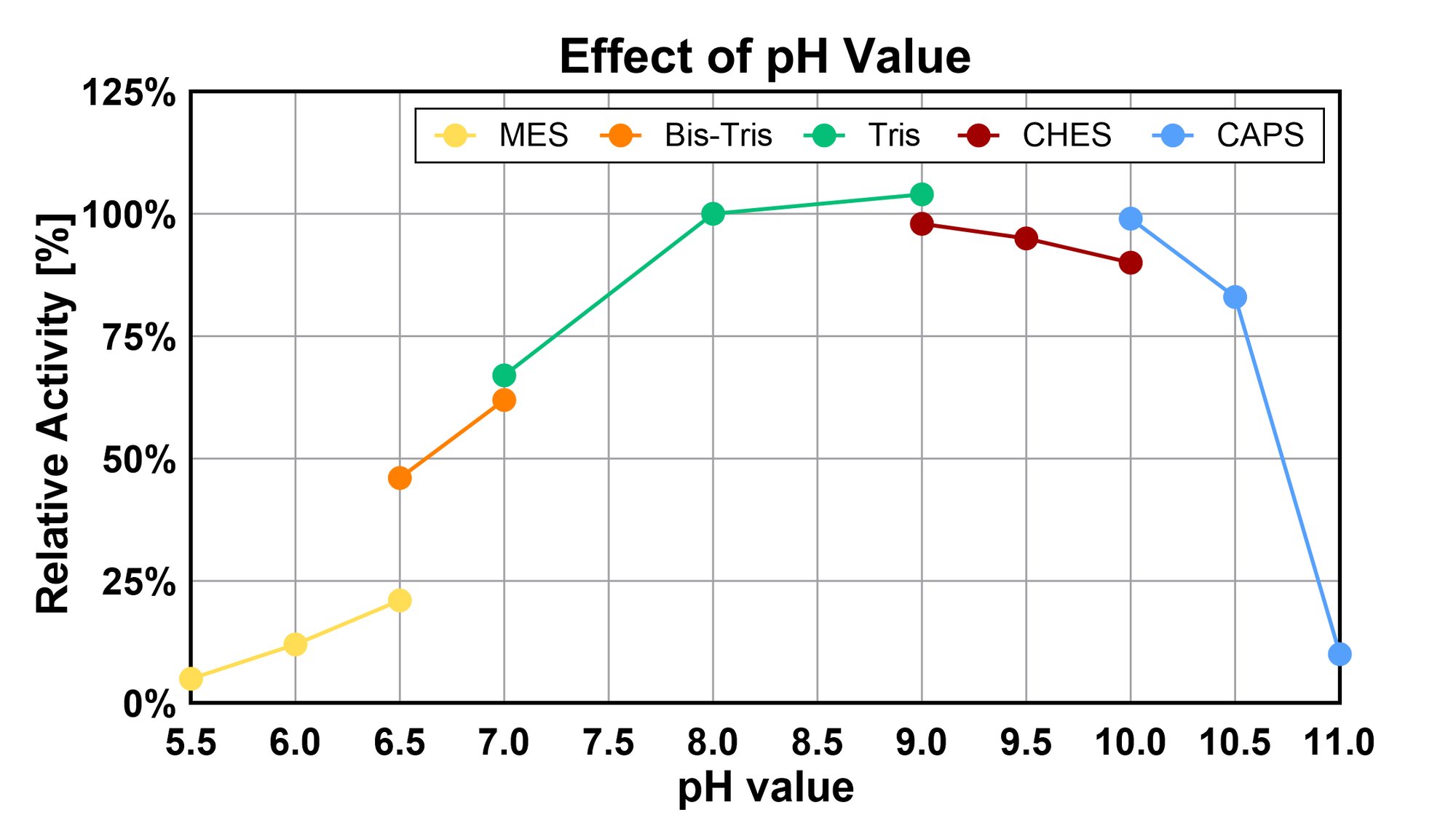
DENARASE® is a very robust enzyme that enables DNA clearance under varying conditions. Its activity depends on various factors, such as availability of cofactors, temperature, and pH. Magnesium (Mg2+) is an essential cofactor: minimal levels are required for basal activity and 1–2 mM Mg2+ for optimal activity (Fig. 1). A large excess of MgCl2 inhibits enzyme activity (Fig. 2). DENARASE® has a temperature optimum of 37 °C and a pH optimum of 8.0 (Fig. 3 & 4).


Effect of Temperature and pH Value
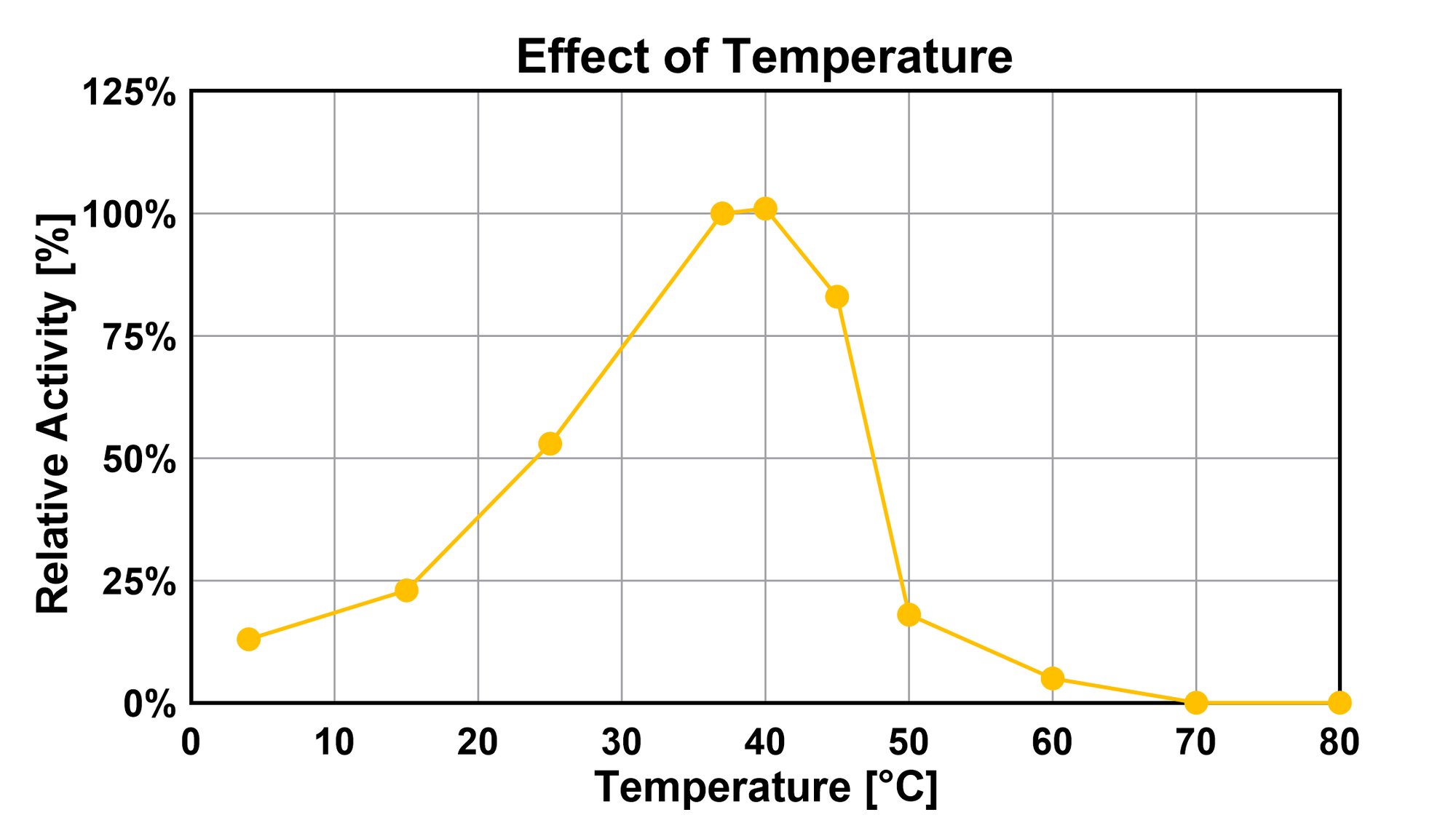
Effect of Temperature on DENARASE® activity

Fig. 1: Effect of temperature

Effect of pH value in different buffer systems on DENARASE® activity

Fig. 2: Effect of pH value in different buffer systems


The Effect of Low and High Magnesium Chloride
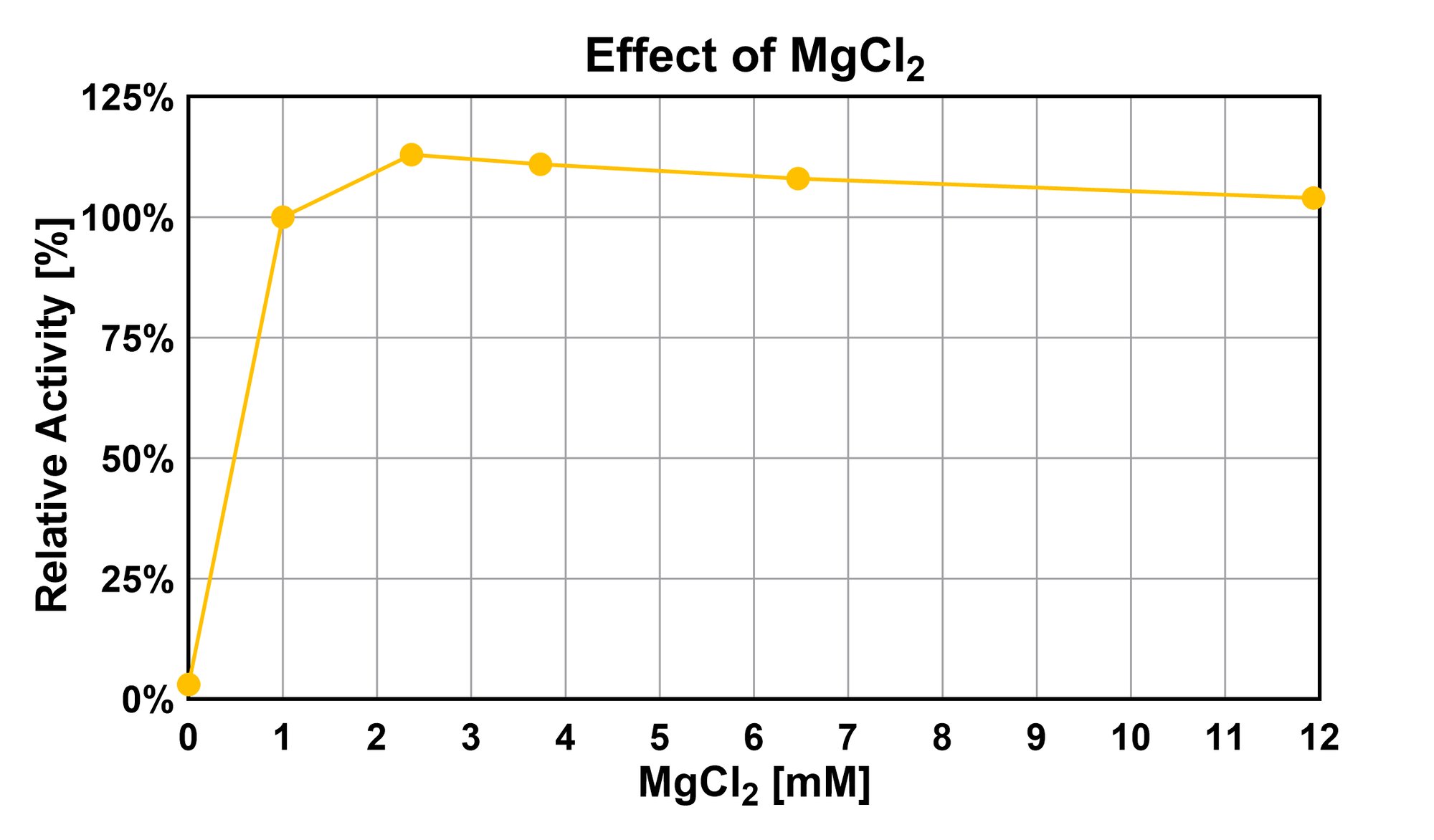
Effect of low magnesium chloride concentrations on DENARASE® activity
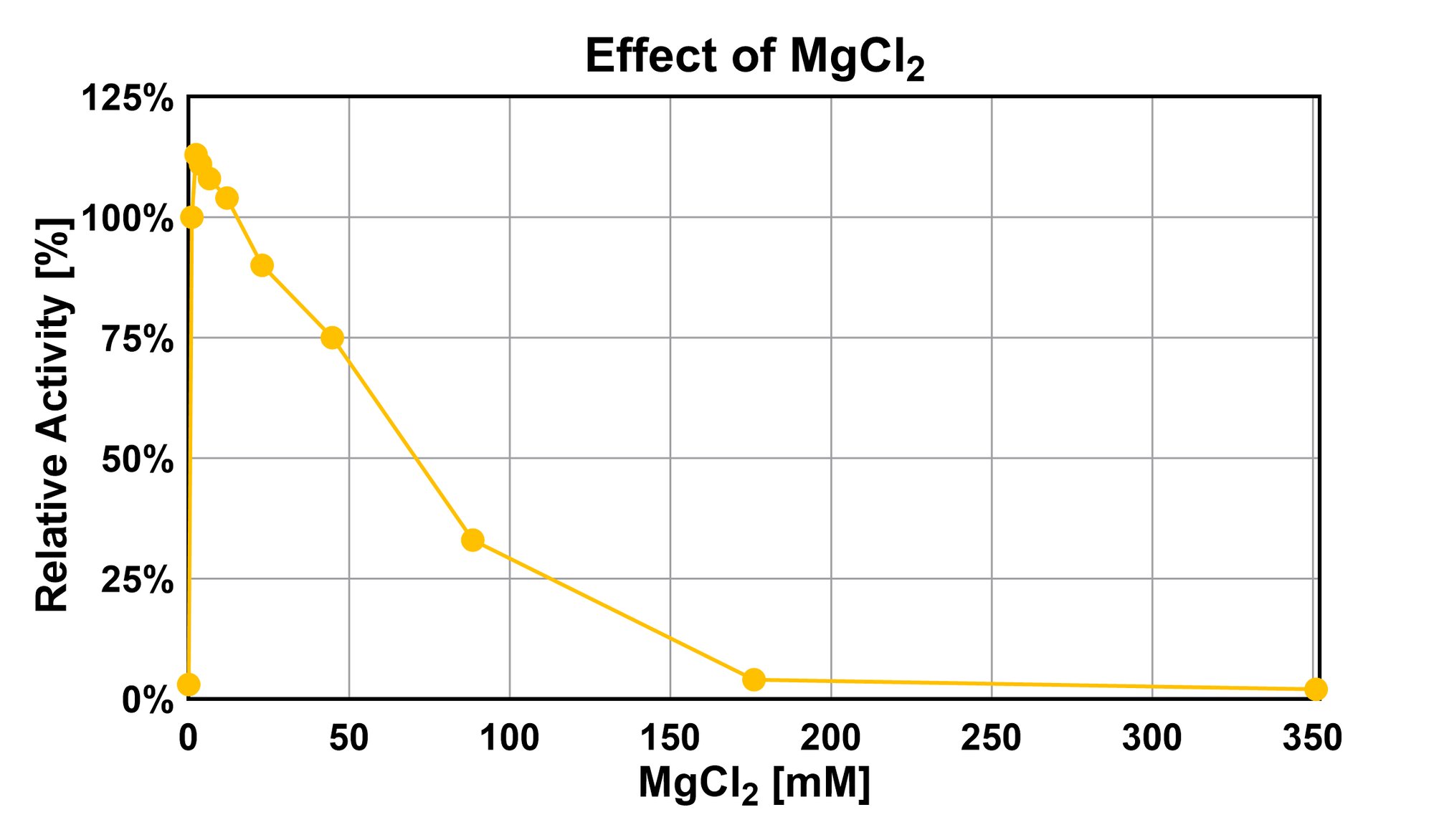
Fig. 3: Effect of low magnesium chloride concentrations on DENARASE® activity

Effect of high magnesium chloride concentrations on DENARASE® activity

Fig. 4: Effect of high magnesium chloride concentrations on DENARASE® activity

Please refer to the Validation Guide for more information on the enzyme activity.

Key Characteristics & Optimal Conditions

Molecular Weight (calculated) 27 kDa (per monomer)
Cofactor Mg2+ (optimum 1–2 mM)
pH Optimum pH 8.0–9.0
Temperature Optimum 37 °C
Isoelectric Point (pI, calculated) 6.2

Product Specification

In order to ensure a constant and high-quality level for DENARASE®, each batch must fulfill the in-house acceptance criteria for the parameters listed below.

Criteria Method Specification
Appearance Visual Clear, transparent solution
Activity Photometric > 250 U/µL
Purity Protein purity determined by SDS-PAGE and silver staining ≥ 99%
Specific Activity Activity per protein content determined photometrically at 280 nm with a molar extinction coefficient of 44,600 L × mol−1 × cm−1 > 6 × 10⁵ U/mg
Protease Activity Protease detection assay No protease activity detectable
Endotoxin Level LAL-Test acc. to Ph. Eur. 2.6.14, Method C < 0.25 EU/kU
Total Microbial Count TAMC/TYMC acc. to Ph. Eur. 2.6.12 Aerobic bacteria: < 5 cfu/200 µL
Yeast/moulds: < 5 cfu/200 µL
Unit definition: One unit (U) will digest salmon sperm DNA to acid-soluble oligonucleotides equivalent to a ΔA260nm of 1.0 in 30 min at pH 8.0 at 37 °C.

Storage & Conditions

The shelf life of DENARASE® is at least 36 months from the date of manufacture / product release when stored at the recommended temperature of −20 °C ± 5 °C. Note: It is not recommended to store the product at −70 °C or below, as deep freezing will cause loss of activity.


Packaging Information

DENARASE® is filled in non-pyrogenic, USP Class VI compliant vials. Product vials are shipped under qualified cooled conditions. The shipping temperature may differ from the recommended storage temperature without affecting product quality. All DENARASE® products are delivered by c-LEcta in a sealed secondary packaging with tamper-evident seals.

General

– Reliable and economical DNA clearance across a broad salt spectrum and different pH levels
– High activity to all forms of DNA/RNA
– Produced under GMP conditions in accordance with EU GMP regulations
– R&D- and GMP-grades with equivalent performance available
– Manufacturing free of animal-derived materials, antibiotics and Triton X-100
– Endotoxin-free expression host · One-for-all Serratia marcescens ELISA Kit

A peer-reviewed study on AAV production (Nascimento et al., J. Biotechnology, Vol. 408, 72–79, Dec. 2025, doi: 10.1016/j.jbiotec.2025.09.002) used DENARASE® as a more economical solution compared to Benzonase®. As efficiency depends on buffer composition, dosing, scalability, and downstream design, results may vary — small-scale feasibility testing is recommended.

The estimated delivery time is 2–3 weeks worldwide.

Usage & Application

DENARASE® hydrolyzes phosphodiester bonds between nucleotides, leaving ~3–5 bp fragments. Active on all nucleic acid forms (single/double-stranded, linear, circular, supercoiled). Widely used in research, process development, and production of viral vectors and vaccines.

Peak performance at low to physiological salt: for use below 150 mM NaCl. Release assay conditions: 0 mM NaCl / 1 mM MgCl2. Recommended starting concentration: 10–100 U/mL; optimize time, concentration, and temperature for your process.

Viral Vector Production (AAV, Lentivirus / HEK293): added during/after cell lysis to reduce viscosity, degrade nucleic acids, and facilitate downstream purification.
Vaccine Manufacturing (live attenuated, inactivated, VLP): reduces host cell DNA during harvest, enhances robustness, prevents aggregation.

Enzyme Characteristics & Quality Grades

Two grades — both technically equal with the same specification parameters.
R&D grade: ISO 9001; less strict documentation, storage, and distribution requirements.
GMP grade: EU GMP; US FDA Drug Master File support; GDP-compliant distribution.

c-LEcta published a comparative study using the DENARASE® activity release test to directly compare both enzymes — essential for dual-sourcing strategies. Data available via the downloads section. 1 Benzonase Nuclease is a registered trademark of Merck KGaA.

Yes. The DENARASE® ELISA Kit quantifies both DENARASE® and Benzonase® with high sensitivity, strong reproducibility, and proven compatibility as a unified assay for residual Serratia marcescens endonuclease monitoring. 1 Benzonase Nuclease is a registered trademark of Merck KGaA.

Process Integration & Quality Control

Anion exchange, cation exchange, hydrophobic interaction, hydroxyapatite, or size exclusion chromatography. Filtration techniques can also apply. The appropriate media must be evaluated per specific case.

~600 mM NaCl is sufficient. Potassium phosphate (200–300 mM) can also quench activity depending on buffer. EDTA (>5 mM) removes free Mg2+ ions and inhibits the enzymatic reaction.

Yes. All batches must meet the endotoxin specification (<0.25 EU/kU) prior to product release. See the Validation Guide for full details.

DENARASE® Scientific Publications

A selection of peer-reviewed publications and reports referencing or featuring DENARASE®.

Viral Vectors for Gene Therapy and Vaccine Production

22 publications
Developing a robust and scalable platform for AAV8 production
Nascimento, André et al.
Journal of Biotechnology, Vol. 408, 72–79, December 2025 · doi: 10.1016/j.jbiotec.2025.09.002
View Publication →
Abundance-biased codon diversification prevents recombination in AAV production and ensures robust in vivo expression of functional FRET sensors
Dernic, Jan et al.
Communications Biology vol. 8,1 1244, 19 Aug. 2025 · doi: 10.1038/s42003-025-08677-6
View Publication →
Salt-tolerant endonucleases, the benefits for viral vector manufacturing and a comparison of two marketed enzymes
Marc Struhalla, Svenja Michalek
Cell & Gene Therapy Insights 2025; 11(3), 305–317, 26 March 2025 · doi: 10.18609/cgti.2025.035
View Publication →
Timed chromatin invasion during mitosis governs prototype foamy virus integration site selection and infectivity
Lagadec, Floriane et al.
Nucleic Acids Research vol. 53,10 gkaf449, 31 May 2025 · doi: 10.1093/nar/gkaf449
View Publication →
A two-pass anion-exchange chromatography strategy for enrichment of full capsids in manufacturing of adeno-associated viral vectors
Thakur, Garima et al.
Molecular Therapy. Methods & Clinical Development vol. 33,2 101441, 3 Mar. 2025 · doi: 10.1016/j.omtm.2025.101441
View Publication →
Recombinant AAV batch profiling by nanopore sequencing elucidates product-related DNA impurities and vector genome length distribution
Dunker-Seidler, Florian et al.
Molecular Therapy. Methods & Clinical Development 33,1 101417, 22 Jan. 2025 · doi: 10.1016/j.omtm.2025.101417
View Publication →
Polo-like kinase inhibitors increase AAV production by halting cell cycle progression
Fisher, Kaylin et al.
Molecular Therapy. Methods & Clinical Development vol. 33,1 101412, 17 Jan. 2025 · doi: 10.1016/j.omtm.2025.101412
View Publication →
Selective Enhancement of REM Sleep in Male Rats through Activation of Melatonin MT1 Receptors Located in the Locus Ceruleus Norepinephrine Neurons
López-Canul, Martha et al.
The Journal of Neuroscience vol. 44,29 e0914232024, 17 Jul. 2024
View Publication →
In vivo CAR T-cell generation in nonhuman primates using lentiviral vectors displaying a multidomain fusion ligand
Nicolai, Christopher J et al.
Blood vol. 144,9 (2024): 977–987
View Publication →
Unveiling the secrets of adeno-associated virus: novel high-throughput approaches for the quantification of multiple serotypes
Meierrieks, Frederik et al.
Molecular Therapy. Methods & Clinical Development vol. 31 101118, 2023
View Publication →
Scaling Up of Steric Exclusion Membrane Chromatography for Lentiviral Vector Purification
Labisch et al.
Membranes 13(2): 149 (2023)
View Publication →
Incubation Temperature and Period During Denarase Treatment and Microfiltration Affect the Yield of Recombinant Adenoviral Vectors During Downstream Processing
Sonogür et al.
Molecular Biotechnology 65(7): 1129–1139 (2023)
View Publication →
Efficient clinical-grade γ-retroviral vector purification by high-speed centrifugation for CAR T cell manufacturing
Mekkaoui et al.
Molecular Therapy. Methods & Clinical Development 28: 116–128 (2022)
View Publication →
Comparison of the performance of anion exchange membrane materials for adenovirus purification using laterally-fed membrane chromatography
Kawka et al.
Biochemical Engineering Journal 182: 108417 (2022)
View Publication →
Steric exclusion chromatography of lentiviral vectors using hydrophilic cellulose membranes
Labisch et al.
Journal of Chromatography A 1674: 463148 (2022)
View Publication →
Integrated development of enzymatic DNA digestion and membrane chromatography processes for the purification of therapeutic adenoviruses
Kawka et al.
Separation and Purification Technology 254: 117503 (2021)
View Publication →
A new simplified clarification approach for lentiviral vectors using diatomaceous earth improves throughput and safe handling
Labisch et al.
Journal of Biotechnology 326: 11–20 (2021)
View Publication →
Scalable upstream process development for the suspension-based production of lentiviral vectors for CAR T cell therapies with multiparallel & benchtop bioreactor systems & DoE methodology
Riethmüller et al.
Cell & Gene Therapy Insights 7(6): 689–700 (2021)
View Publication →
Transfer and scale-up from 10 L BioBLU® to Allegro™ STR 50 and STR 200 Bioreactors
Mainwaring et al.
Cell & Gene Therapy Insights 7(9): 1347–1362 (2021)
View Publication →
Scalability comparison between 50 and 500 liter stirred tank bioreactor for production of rAAV viral vector
Sanderson et al.
Cell & Gene Therapy Insights 7(9): 1025–1033 (2021)
View Publication →
Cell culture-based production and in vivo characterization of purely clonal defective interfering influenza virus particles
Hein et al.
BMC Biology 19(1): 91 (2021)
View Publication →
Highly Efficient Purification of Recombinant VSV-ΔG-Spike Vaccine against SARS-CoV-2 by Flow-Through Chromatography
Lerer et al.
BioTech 10(4): 22 (2021)
View Publication →
A high cell density perfusion process for Modified Vaccinia virus Ankara production: Process integration with inline DNA digestion and cost analysis
Gränicher, Gwendal et al.
Biotechnology and Bioengineering 118(12): 4720–4734 (2021)
View Publication →

Production of Virus-like Particles (VLP)

10 publications
Optimizing nuclease treatment to enhance anion exchange chromatography of HIV-derived virus-like particles
M. S. von Elling-Tammen
Journal of Chromatography B vol. 1256 124539, 2025 · doi: 10.1016/j.jchromb.2025.124539
View Publication →
Production of an immunogenic trivalent poliovirus virus-like particle vaccine candidate in yeast using controlled fermentation
Sherry, Lee et al.
NPJ Vaccines 10,1 64, 31 Mar. 2025 · doi: 10.1038/s41541-025-01111-2
View Publication →
Preclinical evaluation of manufacturable SARS-CoV-2 spike virus-like particles produced in Chinese Hamster Ovary cells
Alpuche-Lazcano et al.
Communications Medicine 3(1): 116 (2023)
View Publication →
Development of modern immunization agent against bovine papillomavirus type 1 infection based on BPV1 L1 recombinant protein
Vrablikova et al.
Frontiers in Veterinary Science 10: 1116661 (2023)
View Publication →
Production of antigenically stable enterovirus A71 virus-like particles in Pichia pastoris as a vaccine candidate
Kingston et al.
bioRxiv (Preprint, 2023)
View Publication →
VelcroVax: a "Bolt-On" Vaccine Platform for Glycoprotein Display
Kingston et al.
mSphere 8(1): e0056822 (2023)
View Publication →
Production and Characterisation of Stabilised PV-3 Virus-like Particles Using Pichia pastoris
Sherry et al.
Viruses 14(10): 2159 (2022)
View Publication →
Protease-Independent Production of Poliovirus Virus-like Particles in Pichia pastoris: Implications for Efficient Vaccine Development and Insights into Capsid Assembly
Sherry et al.
Microbiology Spectrum 11(1): e0430022 (2023)
View Publication →
Development and preclinical evaluation of virus-like particle vaccine against COVID-19 infection
Yilmaz et al.
Allergy 77(1): 258–270 (2022)
View Publication →
Separation of influenza virus-like particles from baculovirus by polymer-grafted anion exchanger
Reiter et al.
Journal of Separation Science 43(12): 2270–2278 (2020)
View Publication →

Production of Bacteriophages

2 publications
In situ targeted base editing of bacteria in the mouse gut
Brödel, Andreas K et al.
Nature vol. 632,8026 (2024): 877–884
View Publication →
Phage therapy potentiates second-line antibiotic treatment against pneumonic plague
Vagima et al.
Viruses 14(4): 688 (2022)
View Publication →

Biofilm Removal

2 publications
Targeting Staphylococcus aureus biofilm-related infections on implanted material with a novel dual-action thermosensitive hydrogel containing vancomycin and a tri-enzymatic cocktail: in vitro and in vivo studies
Buzisa Mbuku, Randy et al.
Biofilm vol. 9 100288, 20 May 2025 · doi: 10.1016/j.bioflm.2025.100288
View Publication →
Hydrolytic Enzymes as Potentiators of Antimicrobials against an Inter-Kingdom Biofilm Model
Ruiz-Sorribas et al.
Microbiology Spectrum 10(1): e02589-21 (2022)
View Publication →

Protein Purification

5 publications
Novel fold and wing structure of Forkhead transcription factor facilitate DNA binding
Wang, George L et al.
Nucleic Acids Research vol. 53,18 (2025): gkaf946 · doi: 10.1093/nar/gkaf946
View Publication →
Mapping the genetic landscape of iron metabolism uncovers the SETD2 methyltransferase as a modulator of iron flux
Martinelli, Anthony W et al.
Science Advances vol. 11,38 (2025): eadw9095 · doi: 10.1126/sciadv.adw9095
View Publication →
Granulins rescue inflammation, lysosome dysfunction, lipofuscin, and neuropathology in a mouse model of progranulin deficiency
Root, Jessica et al.
Cell Reports 43,12 (2024): 114985 · doi: 10.1016/j.celrep.2024.114985
View Publication →
Effective removal of host cell-derived nucleic acids bound to hepatitis B core antigen virus-like particles by heparin chromatography
Valentic, Angela, and Jürgen Hubbuch
Frontiers in Bioengineering and Biotechnology 12 1475918, 3 Oct. 2024 · doi: 10.3389/fbioe.2024.1475918
View Publication →
Deubiquitinating enzyme mutagenesis screens identify a USP43-dependent HIF-1 transcriptional response
Pauzaite, Tekle et al.
The EMBO Journal vol. 43,17 (2024)
View Publication →

Research budgets are tight — we get it. That's why we've put together a fresh round of exclusive promotions designed to help you stock up on the reagents, kits, and consumables your lab depends on, without stretching your budget.

🔬 What's on offer right now:

10% Off Pre-Designed siRNA Sets

15% Off Cancer Antibodies

20% Off Transmembrane Proteins

$50 Off All ELISA Kits

50% Off Lab Consumables + Free Shipping

$99 Pipette Filler Promotion Package

BlasTaq 2X qPCR MasterMix - 50% OFF Limited Time Offer

DENARASE® Endonuclease — 10% Off One Order

10% OFF CELL LINES-Limited-Time Offer

Free Sample – CellTrypase Recombinant Trypsin-Like Enzyme

Get a Quote

Please use this form for bulk quantity requests or customized products.

Contact Information

Product Information

Try Celltrypse Free – Request Your Sample Today

Experience the power of Celltrypse™, c-LEcta's innovative enzyme solution for gentle and efficient cell dissociation. Request your free sample and discover a superior alternative for your cell culture workflows.

Try Celltrypse Free – Request Your Sample Today

Try Celltrypse Free – Request Your Sample Today

Experience the power of Celltrypse™, c-LEcta's innovative enzyme solution for gentle and efficient cell dissociation. Request your free sample and discover a superior alternative for your cell culture workflows.

Try Celltrypse Free – Request Your Sample Today