Kerry Enzymes

Denarase® nucleases for host-cell DNA clearance, the Serratia marcescens ELISA kit, and CellTrypase for animal origin-free cell dissociation — manufactured at the Kerry Biotechnology Centre in Leipzig, Germany and stocked in the United States by BioHippo.

Authorized US distributor R&D + GMP grades EU GMP EXCiPACT® ISO 9001 Animal origin-free US stock, 2–3 days Free samples
4Products
4 products
ProductTypePrice From Status ACTION
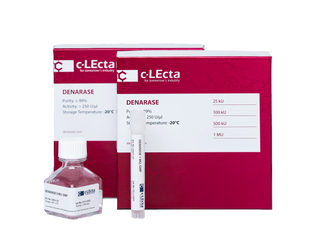
Denarase® — Precision Nuclease for Cleaner Bioprocessing
Best Seller Featured GMP Available Peer-Reviewed Free Sample
6 options
Enzymes
From $599.50
Regular price From $599.50
In Stock
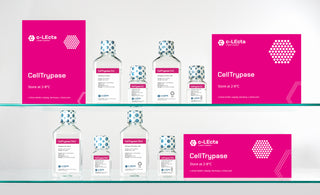
CellTrypase – Recombinant Trypsin-Like Enzyme for Cell Dissociation – Figure 1 of 3
New
8 options
Enzymes
From $32.00
Regular price From $32.00
In Stock
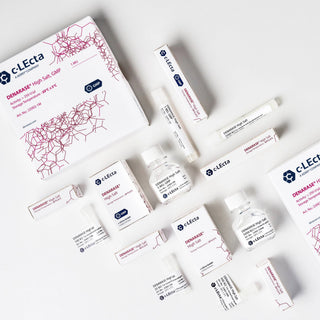
Denarase® High Salt – Salt-Tolerant Nuclease for High-Efficiency DNA Removal
New Featured GMP Available Peer-Reviewed Free Sample
7 options
Enzymes
From $363.00
Regular price From $363.00
In Stock
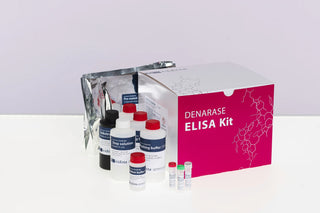
Denarase® ELISA Kit — The One-for-All Serratia marcescens ELISA Kit
Best Seller Featured Peer-Reviewed Bulk Pricing
2 options
ELISA Kits
From $78.00
Regular price From $78.00
In stock

About Kerry enzymes at BioHippo

Kerry manufactures four enzyme products for biopharmaceutical process development and manufacturing: the Denarase® endonuclease for host-cell DNA clearance, Denarase® High Salt for high-conductivity process streams, the Denarase® ELISA Kit for measuring residual nuclease, and CellTrypase, an animal origin-free recombinant trypsin-like enzyme for cell dissociation. All four are made at the Kerry Biotechnology Centre in Leipzig, Germany. BioHippo is the authorized United States distributor and holds R&D-grade material in US stock.

Every product is available in two grades from the same manufacturing process and the same release specification: an R&D grade released under ISO 9001, and a GMP grade released under EU GMP. This lets a process developed at the bench move into a regulated campaign without changing the enzyme.

Which Kerry enzyme do I need?

Choose by the job in your process: remove DNA, measure the nuclease you removed, or detach cells.

ProductUse it whenKey released specificationsGrades and sizes
Denarase®
Endonuclease
You need to degrade host-cell DNA and RNA to reduce viscosity and meet residual-DNA limits, and your process stream is at or below about 150 mM NaCl. Purity ≥99% (SDS-PAGE, silver staining)
Activity >250 U/µL
Endotoxin <0.25 EU/kU
−20 °C ± 5 °C, at least 36 months
Mg²⁺ optimum 1–2 mM, pH optimum 8.0–9.0
R&D: 100, 500, 1,000 and 5,000 kU
GMP: 1 MU and 5 MU
Denarase® High Salt
Salt-tolerant endonuclease
Your stream runs above 150 mM NaCl — for example after elution or in high-conductivity harvest — where standard nuclease activity falls away. Between 150 and 250 mM, test both enzymes. Purity ≥98% (SDS-PAGE, silver staining)
Activity >250 U/µL across 0–500 mM NaCl
Endotoxin <0.25 EU/kU
−20 °C ± 5 °C, at least 30 months
Mg²⁺ 5 mM standard, rising to 25 mM; pH optimum 7.4–9.0
R&D: 25, 100, 500, 1,000 and 5,000 kU
GMP: 1 MU and 5 MU
Denarase® ELISA Kit
Residual-nuclease assay
You have to show how much Serratia marcescens endonuclease is left in the product. One kit covers Denarase®, Denarase® High Salt and Benzonase®. Limit of detection 4 pg/mL
Limit of quantification 12 pg/mL
Working range approx. 32–1,000 pg/mL
480 measurements (5 × 96-well plates)
About 130 minutes total incubation
2–8 °C, 18 months
Complete kit, or replacement wash and dilution buffer (500 mL, 10× concentrate)
For research and manufacturing use; not for diagnostic procedures
CellTrypase
Cell dissociation enzyme
You are detaching adherent cells and need an animal origin-free enzyme with GMP documentation — viral vector and vaccine production, cell banking, or passaging sensitive cell types. Purity ≥95% (size-exclusion HPLC)
1× 0.6–1.2 kU/L; 10× 6–12 kU/L
Endotoxin ≤1 EU/mL (1×), ≤10 EU/mL (10×)
Mycoplasma negative, sterility pass
2–8 °C, at least 21 months; ships at ambient temperature
R&D and GMP, each as 1× or 10×, in 100 mL and 500 mL
Animal origin-free; no inhibitor needed to stop the reaction

Can I start at R&D grade and move to GMP later?

Yes. For each product both grades are made by the same process and released against the same specification; the difference is the quality system behind the release — ISO 9001 for R&D grade, EU GMP for GMP grade, with the Denarase® and CellTrypase GMP grades released under a quality system compliant with the EXCiPACT® standard for pharmaceutical excipients. Kerry also uses different pack-size labels on purpose so the two grades cannot be confused: R&D material is sold in kU, GMP material in MU.

What documentation comes with the material?

Each shipment carries a batch-specific certificate of analysis. Product information sheets, safety data sheets and regulatory support files are supplied on request; the CellTrypase application note and validation guide are available through the CellTrypase technical documents page.

Frequently asked questions

What is the difference between Denarase® and Denarase® High Salt?

Salt tolerance. Denarase® High Salt stays active across 0–500 mM NaCl and is recommended for process steps above 150 mM NaCl, where the wild-type enzyme loses activity; it also runs on more magnesium — 5 mM MgCl₂ as standard, with activity still rising towards 25 mM, against an optimum of 1–2 mM for the wild-type enzyme. Between 150 and 250 mM NaCl, test both and pick the better performer on your stream. The two enzymes are otherwise close: both are >250 U/µL with endotoxin below 0.25 EU/kU and are stored at −20 °C ± 5 °C.

Can one ELISA kit measure both Denarase® variants?

Yes. The Denarase® ELISA Kit detects Denarase®, Denarase® High Salt and Benzonase®, with a limit of detection of 4 pg/mL. Its standard is calibrated against wild-type Denarase®, so when you quantify residual Denarase® High Salt you apply a correction factor of 1.46.

Is CellTrypase animal origin-free?

Yes. CellTrypase is a recombinant trypsin-like enzyme derived from Fusarium oxysporum and expressed in a Bacillus host, with raw materials, equipment and packaging certified animal origin-free and supported by TSE/BSE-free documentation. There is no porcine or bovine material anywhere in the process.

What cell lines has CellTrypase been tested on?

Kerry has published dissociation data for CHO-K1, HEK 293, MDCK and Vero, with 95–99% viability and 100–106% relative yield against an equivalent amount of the current industry-standard trypsin-like enzyme (Product Information Sheet v4.0, 18 August 2026), and for human induced pluripotent stem cells in 2D and 3D culture formats (scientific poster #11462, February 2026). Other cell types carry no published figures, so qualify the enzyme on your own cells before adopting it in a routine or regulated workflow.

Does CellTrypase need a cold chain?

No. CellTrypase ships at ambient temperature and temporary room-temperature exposure during shipment does not affect activity. Store it at 2–8 °C ± 5 °C, protected from light, where it holds at least 21 months from the date of manufacture.

How quickly can BioHippo ship?

R&D-grade material is held in US stock and ships in two to three business days. GMP-grade material is held at the manufacturer and typically takes one to two weeks. BioHippo is the authorized US distributor; a complimentary sample can be requested for evaluation.

Specifications are the manufacturer's released criteria and are current as of September 2026; always confirm against the batch-specific certificate of analysis. Denarase® is a registered trademark of c-LEcta GmbH, a Kerry company. Benzonase® is a registered trademark of Merck KGaA. CellTrypase is supplied for research use; GMP-grade material is intended as a processing aid in biopharmaceutical manufacturing and is not for direct administration to humans or animals.

Get a Quote

Please use this form for bulk quantity requests or customized products.

Contact Information

Product Information