

AAV-GFP (AAV Serotype 1)
AAV-GFP is a recombinant AAV2/1 vector expressing green fluorescent protein (GFP) from the constitutive CMV promoter, packaged between wild-type AAV2 ITRs. GFP provides a bright reporter for mapping serotype-1 tropism, benchmarking transduction, and serving as a delivery control in vivo and in vitro. Supplied as an in vivo-grade frozen liquid in PBS at ≥1×10¹³ VG/mL.
Choose Serotype, then Titer.
Overview
What is AAV-GFP (AAV Serotype 1)?
AAV-GFP (AAV2/1 Vector)
CMV Promoter • pAAV (AAV2 ITR) • Broad CNS and muscle tropism. Catalog: BHV21500002.
Research Background
Fluorescent reporter and control vectors are foundational tools for validating delivery, benchmarking expression levels, and serving as inert controls in experimental designs. AAV2/1 has broad CNS and muscle tropism.
CMV is a strong constitutive viral promoter that drives high-level expression across most cell types; activity can diminish over time in some in vivo settings. The plasmid backbone is pAAV (AAV2 ITR).
What This AAV Enables
Transgene Function: GFP (green fluorescent protein) is a widely used fluorescent reporter for visualizing transduced cells and confirming expression.
Expression Pattern: Expression is constitutive—the transgene is continuously driven by the promoter without requiring an external trigger. The promoter is designed for broad, cell-type-agnostic expression across diverse tissue types.
Capsid Tropism: AAV2/1 has broad CNS and muscle tropism and is widely used for both in vivo and ex vivo applications.
Common Applications
In vivo gene delivery; cell labeling; promoter testing; transduction benchmarking.
Experimental Considerations
Allow sufficient expression time for AAV2/1 in your target tissue (often 2–4 weeks in vivo). Verify targeting and expression level in a pilot cohort before committing to large study groups. Use appropriate controls: GFP-negative or null-vector matched for serotype and dose. Confirm expression distribution with immunostaining, in situ hybridization, or imaging as appropriate.
Controls and Best Practices
Recommended controls include: (1) a null or fluorophore-only matched vector to separate delivery effects from payload effects; (2) tissue-matched positive controls to confirm transduction efficiency at your injection coordinates and timepoint; (3) dose-response characterization if the phenotype is sensitive to expression level; and (4) replication across biological cohorts or preparations to confirm robustness.
Details
Specifications
Applications
Applications & how to use
In Vivo Gene Delivery
Direct administration of the AAV vector into a living animal to drive transgene expression in target tissue. Transduction depends on serotype tropism, delivery route, and dose—validate expression in a pilot cohort before scaling.
Cell Labeling
Uses the vector's fluorescent reporter to mark transduced cells for imaging, tracing, and morphological analysis. Signal clarity depends on promoter strength, expression time, and tissue autofluorescence.
Reporter Assay
Employs the encoded reporter (e.g. GFP) as a readout of promoter activity, transduction efficiency, or expression level, quantified by fluorescence microscopy or flow cytometry.
Transduction Benchmarking
Compares delivery efficiency across serotypes, doses, or cell types using a constitutively expressed reporter as a standardized control, guiding vector selection ahead of functional studies.
Evidence
Validation & QC
Validation data for this product isn’t published yet.
Need specific QC or validation results — titer, purity, endotoxin, or assay data — for your application? Our scientific team can share what is available for this product and lot on request.
Request validation dataQuestions
Frequently asked questions
What is AAV-GFP (AAV Serotype 1) and what does it do?
AAV-GFP (AAV Serotype 1) is a recombinant AAV (AAV2/1) expressing GFP under the CMV promoter. It is designed for in vivo gene delivery, cell labeling, promoter testing, and transduction benchmarking, and delivers stable transgene expression in target tissues.
What is the serotype of this AAV and what does it mean for tissue tropism?
This product uses the AAV2/1 capsid. AAV2/1 offers broad CNS and muscle tropism and is widely used for in vivo and ex vivo transduction of neurons, astrocytes, and muscle fibers. Always validate transduction efficiency in a pilot cohort in your specific tissue and species, as tropism can vary with route, dose, and model.
What promoter drives expression and which cell types does it target?
This product uses the CMV promoter, which drives strong, constitutive expression across most cell types. Activity can vary between tissues and may diminish over time in some in vivo settings. The intended target cell type is ubiquitous. Confirm expression specificity with appropriate marker co-staining in your model and species.
How should I store and handle this AAV vector upon receipt?
Upon receipt, transfer the vector to −80 °C storage as quickly as possible. This product is supplied as a frozen liquid in PBS. Avoid repeated freeze–thaw cycles, as these degrade titer and transduction efficiency — we recommend aliquoting into single-use volumes on first thaw. Thaw on ice or at 4 °C; do not use a 37 °C water bath. Keep samples on ice during procedures and work quickly to minimise time at room temperature.
What is the titer / concentration of this product and how should I interpret it?
This vector is supplied at ≥1×10¹³ VG/mL, determined by qPCR using ITR-specific primers. Titer is reported as viral genomes per millilitre (VG/mL). For in vivo experiments, typical injection volumes range from 0.5–2 µL per site depending on target region and species. The optimal functional dose depends on your tissue, injection route, and desired expression level — we recommend a pilot dose–response experiment before a large study.
Answered by our team
Questions from researchers
BioHippo Technical TeamReal questions from researchers, answered by our technical team. Values shown as [COA: …] are filled per lot from that lot's Certificate of Analysis.
What is the GFP reporter used for in this AAV?
The packaged GFP transgene gives a bright, easily quantified fluorescent readout of transduction. Use it to map AAV serotype-1 tropism, titrate multiplicity of infection, and benchmark delivery in your model before switching to a functional payload.
How should I choose the dose (MOI / vg per cell)?
Start from the genome titer [COA: VG/mL] on the Certificate of Analysis and calculate vg per cell for your seeding density. For AAV serotype 1 in vitro, 1×10³–1×10⁵ vg/cell is a common starting range; optimise empirically, since permissiveness varies by cell type.
Which negative control should I pair with this vector?
For a capsid-matched control, pair it with an AAV serotype-1 empty capsid, or a serotype-1 vector carrying a non-expressing / stuffer cassette, dosed to the same capsid or genome amount. This isolates GFP-expression effects from capsid-related effects such as uptake and innate response.
Answered by the BioHippo Technical Team.
Ask our technical team
Reviewed by a scientist — typically answered within one business day.
Deals
Promotions
Codes apply at checkoutReferences
Citations & references
- Kong G, Zhou L, Serger E, et al. AMPK controls the axonal regenerative ability of dorsal root ganglia sensory neurons after spinal cord injury. Nat Metab. 2020;2(9):918–933. https://doi.org/10.1038/s42255-020-0252-3
- Switala L, Di L, Gao H, et al. Engineered nanoparticles promote cardiac tropism of AAV vectors. J Nanobiotechnology. 2024;22(1):223. https://doi.org/10.1186/s12951-024-02485-6
- Liu XY, Zhang FR, Shang JY, et al. Renal inhibition of miR-181a ameliorates 5-fluorouracil-induced mesangial cell apoptosis and nephrotoxicity. Cell Death Dis. 2018;9(6):610. https://doi.org/10.1038/s41419-018-0677-8
- Lenis TL, Sarfare S, Jiang Z, Lloyd MB, Bok D, Radu RA. Complement modulation in the retinal pigment epithelium rescues photoreceptor degeneration in a mouse model of Stargardt disease. Proc Natl Acad Sci U S A. 2017;114(15):3987–3992. https://doi.org/10.1073/pnas.1620299114
- Xiang J, Yan S, Li SH, Li XJ. Postnatal loss of Hap1 reduces hippocampal neurogenesis and causes adult depressive-like behavior in mice. PLoS Genet. 2015;11(4):e1005175. https://doi.org/10.1371/journal.pgen.1005175
- O'Brien MA. Investigating the Role of the Synaptic Transcriptome in Ethanol-Responsive Behaviors. PhD dissertation, Virginia Commonwealth University; 2014. https://scholarscompass.vcu.edu/etd/3570
In the literature
Research using this product
Every paper below mentions this product's catalogue number (or product name) in its full text — a text match, not a verified citation. Each entry shows what was measured, the sample type where the paper states it, and the sentence the catalogue number appears in, and a link to the figure showing that data — so you can confirm the use case before citing.
Auto-discovered from Europe PMC by manufacturer number / product name / keyword plus supplier. A match may reference a related product; confirm relevance before citing.
Customization
Customization & add-ons
Can’t find the AAV you need—or require a custom design and packaging service? We offer end-to-end support for diverse research and therapeutic needs, including vector design and cloning, AAV packaging services (serotype/capsid selection and production), QC & characterization (project-appropriate testing and documentation), and library preparation for pooled or library-style workflows (project dependent). Click Talk to a Scientist to submit a request form, email us at support@biohippo.com, or explore our Research Services for additional support. Our team will be in contact with you shortly.
Explore
Collections featuring this product
This product is included in the curated collections below. Browse a collection to source everything for a workflow from a single cart.
From the blog
Related articles & guides
 How to Design a ChR2 Expression ExperimentA stage-by-stage ChR2 expression protocol for the planning that precedes the surgery — defining the causal claim, piloting titer, fixing...
14 min read· Aug 2026
How to Design a ChR2 Expression ExperimentA stage-by-stage ChR2 expression protocol for the planning that precedes the surgery — defining the causal claim, piloting titer, fixing...
14 min read· Aug 2026
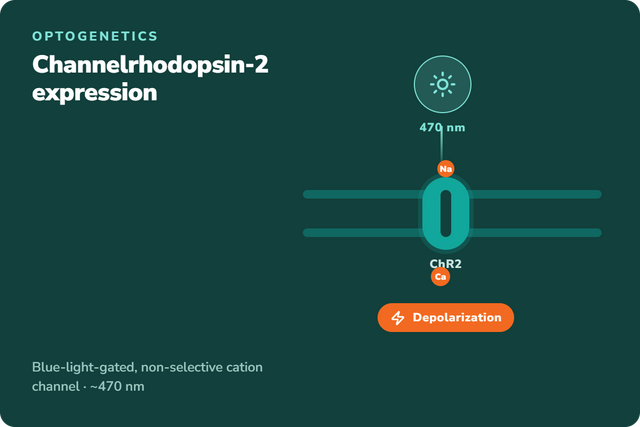 ChR2 Expression: How Channelrhodopsin-2 Constructs WorkChR2 expression is never just the opsin. Promoter, recombinase switch, variant, reporter, trafficking signal and serotype each decide something separate...
13 min read· Aug 2026
ChR2 Expression: How Channelrhodopsin-2 Constructs WorkChR2 expression is never just the opsin. Promoter, recombinase switch, variant, reporter, trafficking signal and serotype each decide something separate...
13 min read· Aug 2026
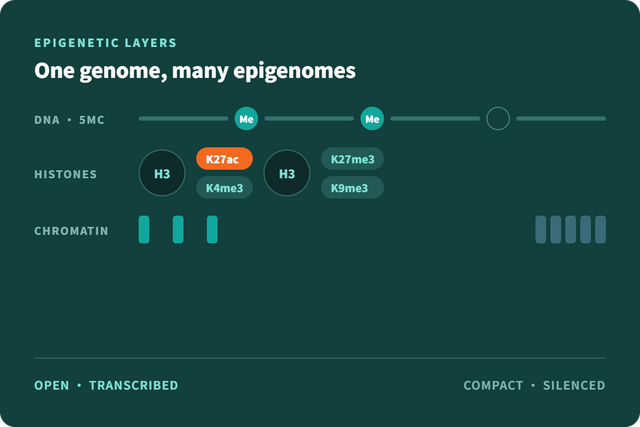 Application NoteUnderstanding Epigenetic Mechanisms: A Researcher's PrimerAn epigenetics primer for bench scientists: how DNA methylation, histone modifications, and non-coding RNA control gene activity, the methods used...
12 min read· Aug 2026
Application NoteUnderstanding Epigenetic Mechanisms: A Researcher's PrimerAn epigenetics primer for bench scientists: how DNA methylation, histone modifications, and non-coding RNA control gene activity, the methods used...
12 min read· Aug 2026
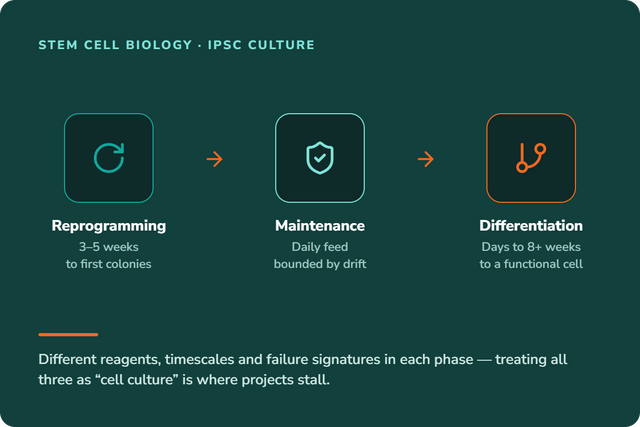 Research guideiPSC Culture Explained: What It Does and When to Use ItWhat iPSC culture buys you — human cells you cannot biopsy, in a defined and editable genetic background — what...
12 min read· Aug 2026
Research guideiPSC Culture Explained: What It Does and When to Use ItWhat iPSC culture buys you — human cells you cannot biopsy, in a defined and editable genetic background — what...
12 min read· Aug 2026
Recently viewed
Recently viewed products
Try Celltrypse Free – Request Your Sample Today
Experience the power of Celltrypse™, c-LEcta's innovative enzyme solution for gentle and efficient cell dissociation. Request your free sample and discover a superior alternative for your cell culture workflows.

Try Celltrypse Free – Request Your Sample Today
Experience the power of Celltrypse™, c-LEcta's innovative enzyme solution for gentle and efficient cell dissociation. Request your free sample and discover a superior alternative for your cell culture workflows.
