

Denarase® R&D-grade (25 kU to 5,000 kU) and GMP-grade (1 MU, 5 MU) packaging. Supplied as a liquid in 50% glycerol in non-pyrogenic, USP Class VI compliant vials.

Denarase® — Precision Nuclease for Cleaner Bioprocessing
Denarase® is the recombinant Serratia marcescens endonuclease from Kerry (formerly c-LEcta), produced by fermentation in an endotoxin-free Bacillus sp. host without animal-derived raw materials or antibiotics. It degrades every form of DNA and RNA to fragments of about 3–5 base pairs and is used as a processing aid to clear host cell DNA and residual plasmid in viral vector, vaccine and virus-like-particle manufacturing, and to reduce lysate viscosity. Every lot is released at ≥ 99% purity, > 250 U/µL activity and < 0.25 EU/kU endotoxin. Two grades come from the same process and are released against the same specification: R&D grade (ISO 9001; 25 kU to 5,000 kU, held in US stock) and GMP grade (EU GMP with an EXCiPACT®-compliant quality system and US FDA Drug Master File support; 1 MU and 5 MU). Supplied in 50% glycerol; store at −20 °C, where Kerry confirms at least 36 months of stability. A complimentary 25 kU sample is available for evaluation.
| Catalog No. | Size | Quality Grade | Availability | Price | Qty | Order |
|---|---|---|---|---|---|---|
| 20804-100K | 100 kU | R&D | In Stock | $599.50 |
|
|
| 20804-500K | 500 kU | R&D | In Stock | $1,831.50 |
|
|
| 20804-1000K | 1000 kU | R&D | In Stock | $2,673.00 |
|
|
| 20804-5000K | 5000 kU | R&D | In Stock | $8,948.50 |
|
|
| 20804-1M | 1 MU | GMP | In Stock at Manufacturer | $3,156.00 |
|
|
| 20804-5M | 5 MU | GMP | In Stock at Manufacturer | $10,573.00 |
|
Choose Size, then Quality Grade.
Overview
What is Denarase® — Precision Nuclease for Cleaner Bioprocessing?
About Denarase®
How Denarase® works
Denarase® specifically hydrolyzes the phosphodiester bonds between nucleotides, leaving smaller fragments of around 3–5 base pairs. The enzyme is active on all forms of nucleic acids including single-stranded, double-stranded, linear, circular, or supercoiled. Because of its high activity and relative insensitivity to the substrate form, it is used as a processing aid / ancillary material to remove excess nucleic acids in biopharmaceutical production processes.
Production of Denarase®
Denarase® has been developed for use in commercial manufacturing processes of biologicals and is produced under GMP conditions according to EU GMP regulations; the c-LEcta quality management system for Denarase® additionally complies with the EXCiPACT® certification standard for GMP/GDP of pharmaceutical excipients. The production process uses a gram-positive, endotoxin-free Bacillus sp. production host (a safety-level-S1 GMO; the final product is free of the production strain). No antibiotics, materials with TSE/BSE risk, or raw materials of animal origin are employed in the manufacture of the product, and Denarase® is manufactured in Germany by c-LEcta GmbH, now part of Kerry.
Denarase® is available in two quality grades
Denarase® for Research and Development (R&D) use & Denarase® for manufacturing under GMP.
- Denarase® R&D-grade is produced in conformity with the ISO 9001 standard, with less strict requirements regarding documentation, storage, and distribution.
- Denarase® GMP-grade is manufactured under EU GMP conditions and is intended for clinical-phase and commercial manufacturing. Dedicated regulatory support for US-market approvals is available through a registered US FDA Drug Master File.
- From a technical performance perspective, both quality grades are equal and the parameters on the specification are the same. This allows for a seamless transition from early R&D stage towards biopharmaceutical manufacturing under GMP.
- In order to avoid mix-ups, packaging units of the same size are indicated differently in the product name of the two quality standards: 1,000 / 5,000 kU for R&D-grade Denarase® and 1 / 5 MU for GMP-grade Denarase®.
Enzyme characteristics and release specification
Denarase® is a very robust enzyme that enables DNA clearance under varying conditions. Its activity depends on various factors, such as availability of cofactors, temperature, and pH. Denarase® has a temperature optimum of 37 °C — temperatures above 40 °C are not recommended because they significantly reduce activity (Fig. 1) — and is highly active in nearly all tested buffer systems, with a pH optimum between 8.0 and 9.0 (Fig. 2). Magnesium (Mg2+) is an essential cofactor: minimal levels are required for basal activity and 1–2 mM Mg2+ for optimal activity (Fig. 3). A large excess of MgCl2 inhibits enzyme activity (Fig. 4). Phosphate buffers inhibit the enzyme by binding Mg2+; this can be partly compensated by raising the MgCl2 concentration (Fig. 5 & 6). Monovalent cations (Na+, K+) should be kept below 150 mM to retain at least 75% activity (Fig. 7). Antifoam emulsion C up to 4% has no inhibitory effect. Source: Kerry / c-LEcta Product Information Sheet v5.4 (Jun 2026) and Validation Guide v6.2 (Sep 2025).
Effect of Temperature and pH Value

Fig. 1: Effect of temperature

Fig. 2: Effect of pH value in different buffer systems
The Effect of Low and High Magnesium Chloride

Fig. 3: Effect of low magnesium chloride concentrations on Denarase® activity

Fig. 4: Effect of high magnesium chloride concentrations on Denarase® activity
The Effect of Phosphate Buffer and Monovalent Cations

Fig. 5: Activity of Denarase® in potassium phosphate buffer pH 8

Fig. 6: Effect of MgCl2 on Denarase® activity in 100 mM potassium phosphate buffer pH 8

Fig. 7: Effect of KCl and NaCl concentration on Denarase® activity
Key Characteristics & Optimal Conditions
| Molecular Weight (calculated) | 27 kDa (per monomer) |
| Cofactor | Mg2+ (optimum 1–2 mM) |
| pH Optimum | pH 8.0–9.0 |
| Temperature Optimum | 37 °C |
| Isoelectric Point (pI, calculated) | 6.2 |
Product Specification
In order to ensure a constant and high-quality level for Denarase®, each batch must fulfill the in-house acceptance criteria for the parameters listed below.
| Criteria | Method | Specification |
|---|---|---|
| Appearance | Visual | Clear, transparent solution |
| Activity | Photometric | > 250 U/µL |
| Purity | Protein purity determined by SDS-PAGE and silver staining | ≥ 99% |
| Specific Activity | Activity per protein content determined photometrically at 280 nm with a molar extinction coefficient of 44,600 L × mol−1 × cm−1 | > 6 × 10⁵ U/mg |
| Protease Activity | Protease detection assay | No protease activity detectable |
| Endotoxin Level | LAL-Test acc. to Ph. Eur. 2.6.14, Method C | < 0.25 EU/kU |
| Total Microbial Count | TAMC/TYMC acc. to Ph. Eur. 2.6.12 | Aerobic bacteria: < 5 cfu/200 µL Yeast/moulds: < 5 cfu/200 µL |
Storage & Conditions
The shelf life of Denarase® is at least 36 months from the date of manufacture / product release when stored at the recommended temperature of −20 °C ± 5 °C. Note: It is not recommended to store the product at −70 °C or below, as deep freezing will cause loss of activity.
Packaging Information
Denarase® is filled in non-pyrogenic, USP Class VI compliant vials. Product vials are shipped under qualified cooled conditions. The shipping temperature may differ from the recommended storage temperature without affecting product quality. All Denarase® products are delivered by Kerry (formerly c-LEcta) in a sealed secondary packaging with tamper-evident seals.
Details
Specifications
Applications
Applications & how to use
Viral Vector Production
Manufacture of AAV, lentiviral and adenoviral vectors in producer lines such as HEK 293 — from cell expansion through harvest, lysis and clarification. Every processing aid used along this chain, from the dissociation enzyme to the nuclease that clears host cell DNA, must carry documentation suitable for regulatory submission.
Vaccine Production
Propagation of viral vaccine substrates in cell lines such as Vero and MDCK, followed by harvest and clearance of host cell DNA from the bulk. Animal origin-free processing aids reduce adventitious-agent risk and simplify the regulatory dossier.
Host Cell DNA Removal
Enzymatic clearance of residual host cell DNA and plasmid DNA from harvested cell culture or lysate, typically added during or immediately after lysis. Regulators expect residual DNA in biologics to be reduced and documented; a nuclease with a defined unit assay, a companion residual-enzyme ELISA and a regulatory support package makes that clearance step easier to validate.
VLP Production
Manufacture of virus-like particles in mammalian, insect or yeast expression systems, where nucleic acids released at harvest bind the particle surface, raise viscosity and co-purify through capture chromatography. Nuclease treatment before or during clarification is used to release bound nucleic acids and improve particle recovery and purity.
Biofilm Removal
Extracellular DNA is a structural component of many bacterial and fungal biofilms. A broad-specificity nuclease degrades this DNA scaffold, which is used in research to disrupt biofilms, potentiate antimicrobials and study biofilm matrix composition. This is a published research use of Serratia marcescens nuclease rather than a manufacturer-validated application.
Protein Purification
Separating a target protein from a complex mixture while keeping it folded and active, using chromatography, spin columns, selective binding or buffer exchange. Recovery and retained activity matter more than purity alone, so an activity assay should accompany the gel at each step.
Downstream Bioprocessing
Clarification, filtration and chromatography steps that follow harvest. Reducing the length and amount of nucleic acid early in downstream processing lowers lysate viscosity, protects depth filters and membranes from fouling and improves the resolution of anion exchange steps. The nuclease itself must then be removed and its residual level documented.
Evidence
Validation & QC · lot-released against spec
Release metrics and QC figures are provided per lot; full numeric values are on the lot-specific CoA.
Manufacturing
How it's made & quality control
Fermentation in Bacillus sp.
Denarase® is the Serratia marcescens endonuclease expressed recombinantly in a Bacillus sp. host — gram-positive and endotoxin-free, classified as a safety-level-S1 GMO. Fermentation uses only raw materials of non-animal origin (synthetic, mineral and plant) and sterilised culture media, with no antibiotics and no materials carrying TSE/BSE risk. The final product is free of the production strain. Manufacturing takes place in Leipzig, Germany, under c-LEcta GmbH's patented production process, and the same fermentation feeds both the GMP and the R&D grade.
Purification and glycerol formulation
Several successive chromatographic bind-elute steps purify the enzyme to at least 99% protein purity by SDS-PAGE with silver staining; these steps also deplete any microbial contamination, including mycoplasma. No ICH Q3C class 1, 2 or 3 solvents are added — ethanol is used only to store chromatography media and is washed out with several column volumes before use. The purified enzyme is 0.2 µm filtered and sterilised glycerol of compendial quality is added aseptically in a cleanroom class A environment, giving the final formulation: 20 mM Tris-HCl pH 8.0 ± 0.2, 20 mM NaCl, 2 mM MgCl₂, 50% glycerol (v/v).
Fill, packaging and batch release
Filling takes place in hygiene- and access-controlled cleanroom areas into non-pyrogenic, USP Class VI compliant vials (PP cryovials for 1 MU GMP, PETG bottles for 5 MU GMP), delivered in sealed secondary packaging with tamper-evident seals. GMP grade is produced and filled under EU GMP within a quality system that also complies with the EXCiPACT® GMP/GDP standard for pharmaceutical excipients; R&D grade is produced under ISO 9001. Both grades share the same process and specification. Every batch is released against the full specification, including:
QC assaysResources
Documents & downloads
Questions
Frequently asked questions
What is Denarase® and what is it used for?
Denarase® is the recombinant Serratia marcescens endonuclease produced by microbial fermentation in Bacillus sp. It hydrolyses the phosphodiester bonds of all forms of DNA and RNA — single- and double-stranded, linear, circular and supercoiled — into fragments of around 3–5 base pairs. It is used as a processing aid to remove host cell DNA, residual plasmid and other process-related nucleic acids in the manufacture of viral vectors, viral vaccines and virus-like particles, to reduce lysate viscosity, and for sample preparation in electrophoresis and chromatography.
Who makes Denarase® — Kerry or c-LEcta?
Both names refer to the same manufacturer. Denarase® is made by c-LEcta GmbH at the Kerry Biotechnology Centre in Leipzig, Germany. c-LEcta remains the legal manufacturer and owner of the patented production process, while the products and documentation are being rebranded under the Kerry name, so current documents read "Kerry (formerly c-LEcta)". BioHippo is an authorised distributor in the United States.
What are the key benefits of Denarase®?
Reliable, economical nucleic acid clearance with high activity on every form of DNA and RNA; production under EU GMP with an EXCiPACT®-compliant quality system and US FDA Drug Master File support for the GMP grade; R&D and GMP grades released against identical specifications; manufacture without animal-derived materials, antibiotics or TSE/BSE-risk materials in a gram-positive, endotoxin-free host; at least 36 months shelf life at −20 °C with documented tolerance of shipping excursions; and a companion one-for-all Serratia marcescens ELISA kit for clearance validation.
Are there different quality grades?
Two grades, technically equivalent and released against the same specification parameters. R&D grade is produced under ISO 9001 with less stringent requirements for documentation, storage and distribution, and is intended for research and process development. GMP grade is produced and filled under EU GMP, with GDP-compliant distribution and US FDA Drug Master File support, and is intended for clinical-phase and commercial manufacturing. Because both grades come from the same process, data generated with R&D grade carry forward when a process moves to GMP. To avoid mix-ups the same pack sizes are named differently: 1,000 / 5,000 kU for R&D grade and 1 / 5 MU for GMP grade.
What are the recommended usage conditions?
Optimal conditions are 37 °C at pH 8.0–9.0 with 1–2 mM Mg2+; temperatures above 40 °C significantly reduce activity. Keep monovalent cations (Na+, K+) below 150 mM to retain at least 75% activity, and prefer Tris-HCl over phosphate buffers, which bind the Mg2+ cofactor (raising MgCl2 partly compensates). Tween 20 and Triton X-100 up to 1% (v/v) and antifoam emulsion C up to 4% do not reduce activity. Kerry recommends starting at 10–60 U/mL and optimising incubation time, enzyme concentration and temperature for your own process. For processes running above about 200 mM salt, consider Denarase® High Salt.
Is Denarase® a cost-efficient alternative to Benzonase® for AAV and other bioprocess applications?
A peer-reviewed study on a scalable AAV8 platform (Nascimento et al., Journal of Biotechnology 408:72–79, 2025, doi:10.1016/j.jbiotec.2025.09.002) evaluated the choice of nuclease among the process modifications that lowered cost without affecting titre, recovery or product quality; the platform used Denarase®, and the authors report significant cost savings from these modifications. Efficiency depends on buffer composition, dosing, scalability and downstream design, so results vary between processes — small-scale feasibility testing is recommended before switching. Benzonase® is a registered trademark of Merck KGaA.
What should I consider when comparing Denarase® and Benzonase® performance?
Both are Serratia marcescens endonucleases with the same protein sequence, but the vendors release them with different activity assays (different DNA substrate and concentration), so the unit values printed on Certificates of Analysis are not directly comparable. In Kerry's 2023 comparison, one GMP lot of each was tested side by side with the Denarase® release assay: volumetric activity and specific activity reported on the Benzonase® CoA were about twice the values obtained in the Denarase® assay, while protein content was comparable, and technical performance was comparable under identical assay conditions. A rule of thumb from that study is 1 U on a Denarase® CoA ≈ 2 U on a Benzonase® CoA. The comparison study can be requested from Kerry through the Documents section. Benzonase® is a registered trademark of Merck KGaA.
How do I inhibit or stop the reaction?
Denarase® depends on free Mg2+, so chelating the magnesium with EDTA stops the reaction, and high concentrations of monovalent salt or phosphate strongly reduce activity (see the Validation data section for the concentration curves). In most bioprocesses the enzyme is not deliberately inactivated but removed in the downstream steps that follow.
How can Denarase® be removed from my process?
In most downstream processes the target molecule is captured, for example by affinity chromatography, and Denarase® flows through. Depending on the process, anion exchange, cation exchange, hydrophobic interaction, hydroxyapatite or size-exclusion chromatography, or filtration techniques such as tangential flow filtration, can be applied; the enzyme also binds resins that mimic DNA or nucleotides (e.g. Cibacron Blue 3G). The appropriate medium must be evaluated case by case. Residual enzyme is quantified with the Denarase® ELISA Kit.
Does the Denarase® ELISA Kit also detect Benzonase®?
Yes. The Denarase® ELISA Kit is a monoclonal-antibody sandwich ELISA that quantifies Denarase®, Denarase® High Salt and Benzonase® in a single assay for residual Serratia marcescens endonuclease monitoring, with a limit of detection of 4 pg/mL and a limit of quantification of 12 pg/mL. Benzonase® is a registered trademark of Merck KGaA.
Are Denarase® products tested for endotoxins and microbial contamination?
Yes. Every batch must meet the endotoxin specification of less than 0.25 EU/kU, tested by kinetic turbidimetric LAL assay according to Ph. Eur. 2.6.14 method C, and the bioburden limits of fewer than 5 cfu per 200 µL for aerobic bacteria and for yeasts and moulds (Ph. Eur. 2.6.12). Each batch is also confirmed free of detectable protease activity. Supportive testing of three representative batches by qPCR (Ph. Eur. 2.6.7) found no mycoplasma, and Kerry's viral-safety assessment rates the contamination risk as low. Details are in the Validation Guide, available on request.
What regulatory and compliance statements are available?
The Validation Guide v6.2 provides statements for both grades on product and country of origin, non-GMO status, antibiotic-free manufacturing, TSE/BSE, melamine, nitrosamines, residual solvents (ICH Q3C), elemental impurities (ICH Q3D, with ICP-MS data on three batches), aflatoxins, radiation, allergens and Halal status, plus GMP-grade statements on EU GMP compliance, adventitious agents and the equivalence of the 1 MU and 5 MU packs. Certificates of Analysis, Safety Data Sheets, a change-guidance document for moving from R&D to GMP grade and US FDA DMF support are available through the Documents section.
How should I store and ship Denarase®?
Store at −20 °C ± 5 °C. Shelf life is at least 36 months from the date of manufacture (GMP grade) or product release (R&D grade), based on an ICH Q5C-compliant real-time stability programme. Do not store at −70 °C or below, because deep freezing causes loss of activity. Product ships in insulated boxes with cold packs; Kerry's transport studies show no loss of activity after 6 days at 4 °C, 6 days on dry ice, or simulated cooling failures reaching +30 °C, so a transit temperature that differs from the storage temperature does not affect quality. Store at −20 °C on receipt.
What is the delivery time for Denarase® products?
R&D grade is held in US stock and ships in 2–3 business days. GMP grade is held at the manufacturer and typically ships within 1–2 weeks. A complimentary 25 kU sample is available on request.
Answered by our team
Questions from researchers
No researcher questions have been answered for this product yet. Ask our technical team and we'll get back to you — approved answers are published here.
Ask our technical team
Reviewed by a scientist — typically answered within one business day.
Deals
Promotions
Codes apply at checkoutReferences
Citations & references
A selection of peer-reviewed publications and reports referencing or featuring DENARASE®.
Viral Vectors for Gene Therapy and Vaccine Production
22 publicationsProduction of Virus-like Particles (VLP)
10 publicationsProduction of Bacteriophages
2 publicationsBiofilm Removal
2 publicationsProtein Purification
5 publicationsIn the literature
Research using this product
Every paper below mentions this product's catalogue number (or product name) in its full text — a text match, not a verified citation. Each entry shows what was measured, the sample type where the paper states it, and the sentence the catalogue number appears in, and a link to the figure showing that data — so you can confirm the use case before citing.
Auto-discovered from Europe PMC by manufacturer number / product name / keyword plus supplier. A match may reference a related product; confirm relevance before citing.
Customization
Customization & add-ons
Explore
Collections featuring this product
This product is included in the curated collections below. Browse a collection to source everything for a workflow from a single cart.
From the blog
Related articles & guides
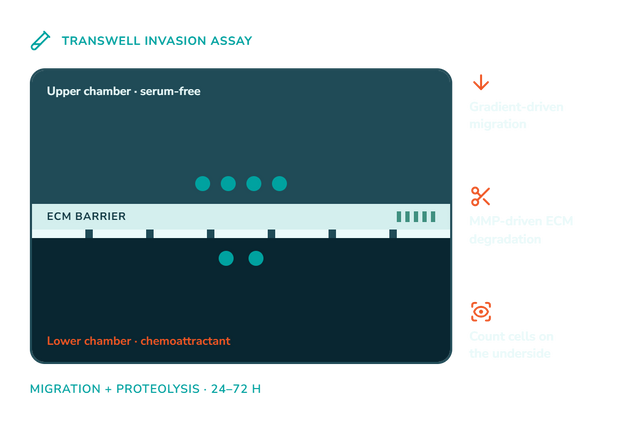 Application NoteInvasion Assays: A Step-by-Step Experimental WorkflowHow to plan, run and quantify in vitro cell migration and invasion assays: choosing between scratch, chemotaxis, transwell invasion and...
12 min read· Sep 2026
Application NoteInvasion Assays: A Step-by-Step Experimental WorkflowHow to plan, run and quantify in vitro cell migration and invasion assays: choosing between scratch, chemotaxis, transwell invasion and...
12 min read· Sep 2026
 Application NoteXeno-Free MSC Harvesting for Regenerative Medicine WorkflowsWhat the detachment step does to the surface markers that define an MSC product, what documentation an animal-origin-free dissociation enzyme...
11 min read· Sep 2026
Application NoteXeno-Free MSC Harvesting for Regenerative Medicine WorkflowsWhat the detachment step does to the surface markers that define an MSC product, what documentation an animal-origin-free dissociation enzyme...
11 min read· Sep 2026
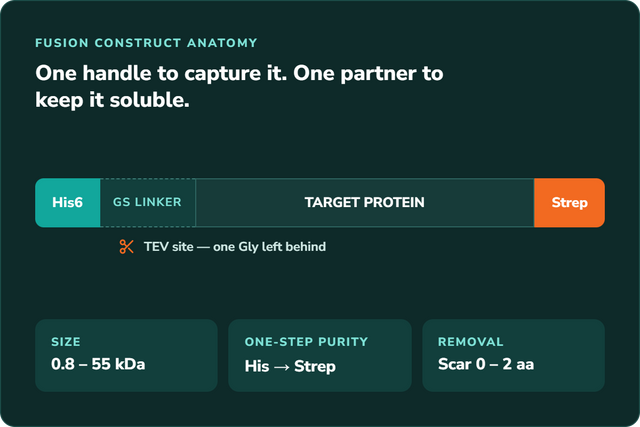 Protein Purification Tags: Which One Fits Your Model?A working comparison of protein purification tags — His, GST, MBP, Strep-tag II, FLAG, SUMO and the epitope tags —...
12 min read· Sep 2026
Protein Purification Tags: Which One Fits Your Model?A working comparison of protein purification tags — His, GST, MBP, Strep-tag II, FLAG, SUMO and the epitope tags —...
12 min read· Sep 2026
Recently viewed
Recently viewed products
Try Celltrypse Free – Request Your Sample Today
Experience the power of Celltrypse™, c-LEcta's innovative enzyme solution for gentle and efficient cell dissociation. Request your free sample and discover a superior alternative for your cell culture workflows.

Try Celltrypse Free – Request Your Sample Today
Experience the power of Celltrypse™, c-LEcta's innovative enzyme solution for gentle and efficient cell dissociation. Request your free sample and discover a superior alternative for your cell culture workflows.
