

| Field | Specification |
|---|---|
| Applications | |
| Form | liquid |
| Storage | |
| Shipping | |
| Catalog no. (Mfr.) | |
| Main SKU |
Description
Hieff NGSTM UCF.ME DNA Selection Beads are prepared based on the SPRI (Solid Phase Reverse Immobilization) principle and is applicable for DNA purification and size selection during the preparation of next generation sequencing (NGS) libraries. Hieff NGSTM UCF.ME DNA Selection Beads are compatible with various of DNA and RNA library prep kits. This product is manufactured in an ultra-clean facility with a high level of cleanliness and can be used for DNA purification step during pathogen detection processes.
Specifications
|
Cat.No. |
17266ES03 /17266ES75 |
|
Size |
1 mL /450 mL |
Components
|
Components No. |
Name |
17266ES03 |
17266ES75 |
|
17266 |
Hieff NGS UCF.ME DNA Selection Beads |
1 mL |
450 mL |
Storage
This product should be stored at 2~8℃ for 18 months.
Shipping and Storage
The beads are shipping with ice packs and can be stored at 2°C-8°C for one year.
Instructions
- 1. Preparation
Equilibrate the selection beads at room temperature for at least 30 min before use.
- 2. DNA Size selection
The operation flow of size selection is shown in Figure 1 and the protocol is as follows.
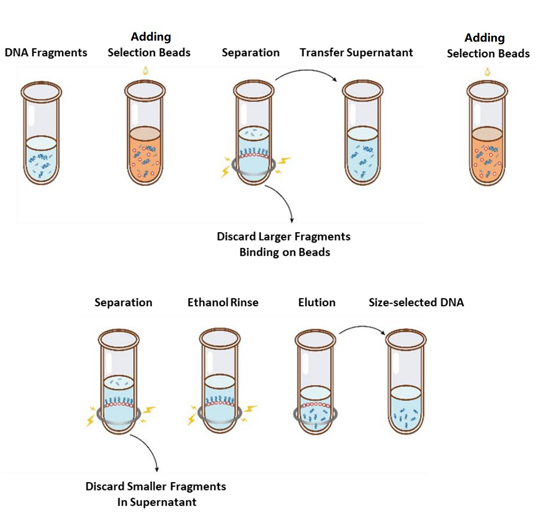
Figure 1. The Flowchart of DNA Size Selection
2.1 Mix the beads thoroughly by vortexing or pipetting up and down every time before using.
2.2 Add the first round of selection beads to the sample (refer to Table 1). Mix thoroughly by vortexing or pipetting up and down at least 10 times.
2.3 Incubate at room temperature for 5 min.
2.4 Spin down the tube briefly and place it on magnetic stand. When the solution is clear (about 5 min), transfer the supernatant to a new PCR tube.
2.5 Add the second round of selection beads to the sample from step 2.4 according to Table 1. Mix thoroughly by vortexing or pipetting up and down at least 10 times.
2.6 Incubate at room temperature for 5 min.
2.7 Spin down the tube briefly and place it on magnetic stand. When the solution is clear (about 5 min), aspirate the supernatant and discard.
2.8 Keep the tube in the magnetic stand and add 200 μL of freshly prepared 80% ethanol to without disturbing the beads, incubate at room temperature for 30 sec. Aspirate the ethanol and discard.
2.9 Repeat step 2.8 once for a total of two washes.
2.10 Remove residual ethanol with 10 µL pipette tips. Keep the tube in the magnetic stand, air dry the selection beads with the lid open until cracks just appear (about 5 min).
Note:Donotover-drytheselectionbeads.ThismayresultinlowerrecoveryDNAtarget.
2.11 Remove the tube from the magnetic stand. Add an appropriate amount of ddH2O (≥20 µL) and mix thoroughly by vortexing or pipetting up and down at least 10 times.
2.12 Incubate at room temperature for 5 min.
Spin down the tube briefly and place it on the magnetic stand. When the solution is clear (about 5 minutes), transfer 20 μL of the supernatant to a new tube.
- 3.Recommended Conditions for DNA Size Selection
The calf thymus DNA was fragmented by sonication to prepare a fragment of 100-1,000 bp, and two rounds of size selection were performed according to Table 1. The results were analyzed using Agilent 2100 Bioanalyzer (Figure 2).
Table 1. Recommended condition for DNA size selection
| Length of DNA fragment | 250-350 bp | 320-420 bp | 450-550 bp | 550-700 bp | 700-900 bp | 800-1,000 bp |
| Ratio of Beads: DNA for the 1st Round | 0.80× | 0.70× | 0.60× | 0.55× | 0.50× | 0.45× |
| Ratio of Beads: DNA for the 2nd Round | 0.20× | 0.20× | 0.20× | 0.15× | 0.15× | 0.15× |
Note: "×" in the table indicates the volume of sample DNA. For example, if the insert length of the library is 250 bp and the sample DNA volume is 100 μL, the volume of magnetic beads used in the first round of sorting is 0.80×100 μL=80 μL; the volume of magnetic beads used in the second round of sorting is 0.20× 100 μL=20 μL.
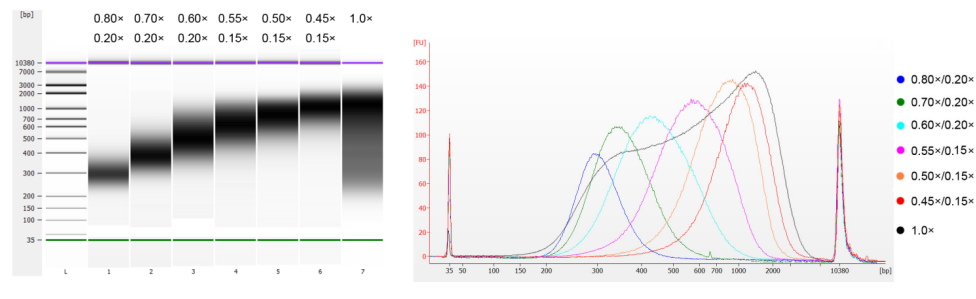
Figure 2. Agilent 2100 high-sensitivity DNA chip electropherogram
Notes:1. For your safety and health, please wear lab coats and disposable gloves for operation.
UCF.ME stands for Ultra-Clean Facility with Minimal Errors. These beads are manufactured in a cleanroom environment under strict contamination controls designed to minimize environmental DNA, RNA, and nuclease contamination. This is particularly important for low-input DNA applications (e.g., cfDNA, single-cell, FFPE) where trace contamination can significantly affect sequencing results.
The UCF.ME beads use the same SPRI principle but are produced under more stringent ultra-clean manufacturing conditions. This makes them the preferred choice for sensitive low-input library preparation workflows such as cell-free DNA (cfDNA), single-cell genomics, FFPE-derived DNA, and other applications where background contamination must be minimized.
Size selection ratios follow standard SPRI principles: ~1.8× for adapter dimer removal; lower ratios (e.g., 0.7–0.9×) for selecting larger fragments. Dual-sided selection protocols are recommended for tight fragment windows. Detailed ratio tables are in the product manual (see Documents).
Beyond standard SPRI handling (equilibrate to RT, mix gently, avoid freezing), the UCF.ME beads should be stored in a clean area away from PCR products and other potential contaminants to maintain their ultra-clean specification. Handle with DNase-free, RNase-free equipment where possible.
Store at 2–8°C for up to 18 months. Do not freeze. Ship with ice packs — verify cold chain on receipt. Allow to equilibrate to room temperature before use.
The following customization and add-on services may be available for this product type through the supplier. For inquiries and pricing, contact support@biohippo.com.
Customization Options
- Bulk Quantities: Larger volumes and custom pack sizes beyond the standard catalog may be available for high-throughput core facilities and industrial customers. Contact us to inquire about bulk pricing.
- Custom Antibody Coupling (Magnetic Beads): Custom magnetic beads conjugated to your specific antibody or protein ligand may be available through Yeasen's OEM and custom services program. These services leverage the same bead platform used for catalog products.
- OEM Manufacturing: Custom bead formulations for diagnostic device development, including magnetic beads for nucleic acid isolation, IP-grade beads, and affinity capture beads, may be available at manufacturing scale.
To inquire about custom options or bulk pricing, contact support@biohippo.com.

