


(+)-Bicuculline
(+)-Bicuculline (CAS 485-49-4) inhibits (IC50 = 9 µM) recombinant α1β1γ2 GABA(A) channels that were activated with 3 µM GABA1. Supplied as Lyophilized powder (purity >99% (HPLC), solubility DMSO (with gentle warming), DMF, chloroform. Centrifuge all product preparati...). Commonly used in Neuroscience studies, including patch-clamp electrophysiology and ion channel screening.
Choose Size, then Quantity.
Overview
What is (+)-Bicuculline?
Product details
- Chemical name: [R-(R*,S*)]-6-(5,6,7,8-Tetrahydro-6-methyl-1,3-dioxolo[4,5-g]isoquinolin-5-yl)furo[3,4-e]-1,3-benzodioxol-8(6H)-one.
- CAS number: 485-49-4
- Molecular formula: C20H17NO6.
- Purity: >99% (HPLC)
- Concentration: 1-100 µM.
- Form: Lyophilized powder.
- Solubility: DMSO (with gentle warming), DMF, chloroform. Centrifuge all product preparations before use (10000 x g 5 min).
- Reconstitution: Centrifuge the vial before adding solvent (10,000 x g for 5 minutes) to spin down all the powder to the bottom of the vial. The lyophilized product may be difficult to visualize. Add solvent directly to the centrifuged vial. Tap the vial to aid in dissolving the lyophilized product. Tilt and gently roll the liquid over the walls of the vial. Avoid vigorous vortexing. Light vortexing for up to 3 seconds is acceptable if needed. For long-term storage in solution, we recommend preparing a stock solution by dissolving the product in sterile water at a concentration of at least 0.1 mg/mL. Divide the stock solution into small aliquots and store at -20°C. Before use, thaw the relevant vial(s) and dilute to the desired working concentration in your working buffer. It is recommended to prepare fresh solutions in working buffers just before use. Repeat freeze-thawing may result in loss of activity
- Shipping: Shipped at room temperature. Product as supplied can be stored intact at room temperature for several weeks. For longer periods, it should be stored at -20°C.
- Target: GABA(A) receptors
- Source: Synthetic
- Activity: (+)-Bicuculline inhibits (IC50 = 9 µM) recombinant α1β1γ2 GABA(A) channels that were activated with 3 µM GABA1.
Scientific background
γ-Aminobutyric acid (GABA) is an amino acid derivate, synthesized from glutamate by the pyridoxal-L-phosphate (PLP)-dependent enzyme, glutamate decarboxylase (GAD)1. GABA provides the primary inhibitory signaling in the adult mammalian brain (CNS), and, to some degree of controversy, exerts a depolarizing response in the developing brain2.GABA is an agonist of two main receptor classes in the CNS: GABAA, an ionic ligand-gated channel, and GABAB, a metabotrophic, G-protein coupled receptor. GABAA is assembled by 5 out of 16 possible subunits with α, β and either a γ or a δ (2:2:1 stoichiometry) being the most common. With an EC50 between 3 to 12 μM it interacts with GABA to allow either an influx or an efflux of Cl- ions into and out of the cell, respectively3.Bicuculline (BIC) is a competitive allosteric inhibitor of GABAA-induced currents with an IC50 of 1-3 μM4. BIC has been employed to model epileptic seizures in hippocampal slices5, to induce schizophrenia-like symptoms in the pre-frontal cortex6, and is an essential research tool in the study of various psychomotor and behavioral defects4-6.
Lead time: 1-2 Business Days
Country of origin: Israel/IL
Applications key
Application key: FC- Flow cytometry, IFC- Indirect flow cytometry, IHC- Immunohistochemistry,LCI- Live cell imaging, Calcium imaging assay,Cell survival assay, Electrophysiology, Neurite outgrowth assay.
Bioassay tested: Yes
Cited application(s)
Electrophysiology
Details
Specifications
Applications
Applications & how to use
Functional Assay (In Vitro)
A cell-free biochemical readout performed in a tube or microplate, where purified components are reconstituted so a single molecular event can be measured in isolation. Preferred when the goal is a direct, interpretable measurement without the confounding variables of a cellular system.
Evidence
Validation & QC
Validation data for this product isn’t published yet.
Need specific QC or validation results — titer, purity, endotoxin, or assay data — for your application? Our scientific team can share what is available for this product and lot on request.
Request validation dataManufacturing
How it's made & quality control
Supplier quality control
Each antibody is validated in the applications it is sold for (WB, IHC, IF/ICC, live-cell imaging) with target-specific staining data on the datasheet.
Peptide toxins and small molecules ship with lot-specific purity data; recombinant and native toxins include activity confirmation.
Lot-specific Certificate of Analysis and product datasheet provided; MSDS available for toxins and chemical reagents.
Supplier-level quality statement. For lot-specific results, request the Certificate of Analysis for your batch.
Answered by our team
Questions from researchers
No researcher questions have been answered for this product yet. Ask our technical team and we'll get back to you — approved answers are published here.
Ask our technical team
Reviewed by a scientist — typically answered within one business day.
Deals
Promotions
Codes apply at checkoutIn the literature
Research using this product
Every paper below mentions this product's catalogue number (or product name) in its full text — a text match, not a verified citation. Each entry shows what was measured, the sample type where the paper states it, and the sentence the catalogue number appears in, and a link to the figure showing that data — so you can confirm the use case before citing.
Auto-discovered from Europe PMC by manufacturer number / product name / keyword plus supplier. A match may reference a related product; confirm relevance before citing.
Customization
Customization & add-ons
Need this compound in a format that drops straight into your assay? We can tailor formulation, chemistry, and documentation so your results stay consistent across runs and re-orders.
- Format options: solid or pre-dissolved solution (choose solvent), target concentration, aliquots, light/moisture-protected packaging
- Chemistry options: free base/acid vs salt forms, hydrate/solvate preference, stereoisomer control (single enantiomer or racemate), close analogs
- Add-on labels & handles: D/¹³C/¹⁵N isotopes (LC-MS/internal standards), azide/alkyne or other functional handles for conjugation
- QC & documentation: standard COA or enhanced analytical pack (HPLC/LC-MS/NMR), chiral purity, residual solvents, water content (KF), method-specific specs
- Scale & continuity: mg to gram scale, bulk pricing, lot reservation, repeat-order continuity
To quote quickly, tell us: compound name + CAS/structure (SMILES or mol file), intended assay context, solvent preference, salt/stereochemistry requirements, purity/QC level, and the amount (mg–g).
Can’t find the compound you’re looking for?
Send the CAS or structure and your specs. We can help source it, suggest close equivalents, or discuss custom synthesis with the right QC documentation (RUO).
Explore
Collections featuring this product
This product is included in the curated collections below. Browse a collection to source everything for a workflow from a single cart.
From the blog
Related articles & guides
 Research guideWeak or Inconsistent iPSC Culture Results? Start HereA four-step diagnostic guide to iPSC culture troubleshooting: run the 30-minute triage, classify which of four failure patterns you are...
12 min read· Aug 2026
Research guideWeak or Inconsistent iPSC Culture Results? Start HereA four-step diagnostic guide to iPSC culture troubleshooting: run the 30-minute triage, classify which of four failure patterns you are...
12 min read· Aug 2026
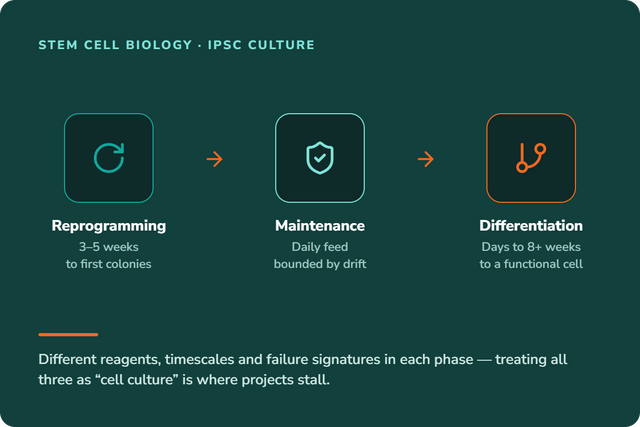 Research guideiPSC Culture Explained: What It Does and When to Use ItWhat iPSC culture buys you — human cells you cannot biopsy, in a defined and editable genetic background — what...
12 min read· Aug 2026
Research guideiPSC Culture Explained: What It Does and When to Use ItWhat iPSC culture buys you — human cells you cannot biopsy, in a defined and editable genetic background — what...
12 min read· Aug 2026
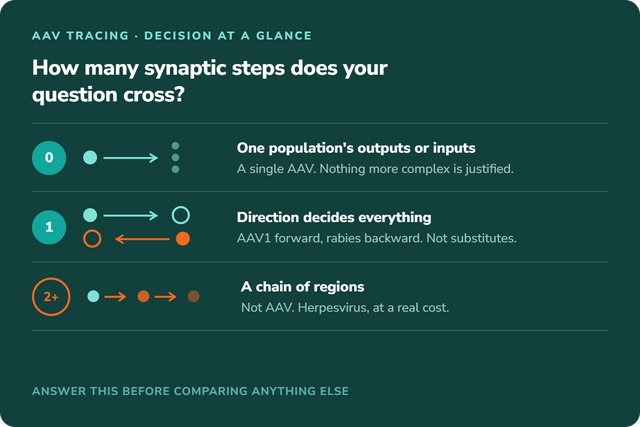 Comparison guideAAV Tracing Comparison: Which Approach Answers Your QuestionAn AAV tracing comparison across anterograde, retrograde, transsynaptic AAV, monosynaptic rabies, herpesvirus and classical dye tracers — and the six...
12 min read· Aug 2026
Comparison guideAAV Tracing Comparison: Which Approach Answers Your QuestionAn AAV tracing comparison across anterograde, retrograde, transsynaptic AAV, monosynaptic rabies, herpesvirus and classical dye tracers — and the six...
12 min read· Aug 2026
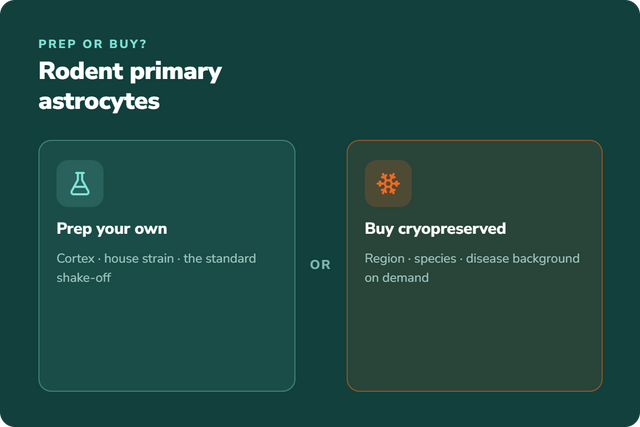 Application NoteRodent Primary Astrocytes: When to Buy vs. Isolate Your OwnWhen to buy cryopreserved rodent primary astrocytes instead of isolating your own — a decision guide covering region, species, donor...
8 min read· Jul 2026
Application NoteRodent Primary Astrocytes: When to Buy vs. Isolate Your OwnWhen to buy cryopreserved rodent primary astrocytes instead of isolating your own — a decision guide covering region, species, donor...
8 min read· Jul 2026
Recently viewed
Recently viewed products
Try Celltrypse Free – Request Your Sample Today
Experience the power of Celltrypse™, c-LEcta's innovative enzyme solution for gentle and efficient cell dissociation. Request your free sample and discover a superior alternative for your cell culture workflows.

Try Celltrypse Free – Request Your Sample Today
Experience the power of Celltrypse™, c-LEcta's innovative enzyme solution for gentle and efficient cell dissociation. Request your free sample and discover a superior alternative for your cell culture workflows.
