

BeaverBeads Circulating DNA Kit as supplied: outer carton with lysis, washing and elution buffers, Proteinase K, Solution A and the magnetic bead suspension.

BeaverBeads Circulating DNA Kit
A magnetic bead kit for isolating cell-free DNA from 0.2 to 5 mL of serum or plasma. The manufacturer reports recovery above 85% across all volumes tested, elution into as little as 20 uL for maximum concentration, and buffer chemistry that removes PCR inhibitors and protein carry-over. Purified cfDNA is ready for PCR, sequencing and detection.
Choose Size.
Overview
What is BeaverBeads Circulating DNA Kit?
Product Overview
The BeaverBeads™ Circulating DNA Kit isolates cell-free DNA from serum or plasma using superparamagnetic silica microspheres and pre-made buffers. Circulating DNA is present at very low concentration — the manufacturer reports roughly 10 ng per mL from normal human serum — and is fragmented, so the method is built around recovering as much of it as possible and concentrating it into the smallest workable volume.
Performance
Recovery above 85% across all sample volumes tested; elution to as little as 20 µL. The buffer system removes the PCR inhibitors and protein carry-over that otherwise limit downstream sensitivity, and the manufacturer reports consistent qPCR Ct values across replicates. Sample input is flexible from 0.2 to 5 mL of serum or plasma; the 100-reaction configuration listed here is set up for a 1 mL sample, with a scaling table in the manual for other volumes. Purified cfDNA is suitable for PCR amplification, sequencing and detection.
Workflow
Proteinase K and lysis buffer digest the sample for 10 minutes at 55 °C with intermittent vortexing. Isopropanol and beads are added, mixed at maximum speed and left 10 minutes at room temperature to bind. Beads are then washed once with washing buffer and twice with 75% ethanol, air-dried on the magnet for 10 minutes, and eluted in 50 µL of elution buffer pre-warmed to 55 °C (the manual notes elution can go as low as 20 µL when maximum concentration matters, at some cost in efficiency). Eluted cfDNA can be stored at −20 °C.
Kit contents
Supplied: BeaverBeads™ magnetic beads · Lysis Buffer · Washing Buffer · Elution Buffer · Proteinase K (dry powder) · Solution A (for dissolving the Proteinase K). Not supplied, prepared by the user: isopropanol (AR grade), approximately 0.5 mL per sample, and 75% (v/v) ethanol, approximately 3.8 mL per sample.
Equipment required
A 55 °C dry bath or water bath, a magnetic separator (BEAVER Cat. 60201 fits 1.5 mL, 2 mL and 15 mL tubes), a vortex mixer, 200 µL and 1000 µL single-channel pipettes, and one 1.5 mL and one 15 mL tube per sample. BEAVER's dry bath incubator (Cat. 2016C) with the 1.5 mL 6-well aluminum module (Cat. 90103) covers the heating step.
Handling and safety
Before first use, dissolve the Proteinase K powder in the specified volume of Solution A, tick the box on the bottle label, and store the reconstituted enzyme at 2–8 °C, or at −20 °C after aliquoting. Do not freeze the magnetic beads. Prepare 75% ethanol fresh — it should not be stored for more than 2 days. If precipitate appears in the Lysis Buffer, incubate 2 minutes at 37 °C before use. During the drying step, remove any residual liquid with a small-volume pipette; carry-over ethanol inhibits downstream enzymatic reactions.
For Research Use Only. Not for use in diagnostic or therapeutic procedures. Specifications and protocol are those published by the manufacturer, BEAVER Biomedical Engineering Co., Ltd.
Details
Specifications
Applications
Applications & how to use
PCR
Enzymatic amplification of a defined DNA target through repeated cycles of denaturation, primer annealing and extension. Success depends as much on template purity as on the polymerase, since carry-over ethanol, humic substances, haem and heparin all inhibit the reaction at concentrations far below what a spectrophotometer will flag.
qPCR
Real-time quantitative PCR, measuring amplification as it happens to determine starting template quantity from the Ct value. Because Ct is a relative measure, inhibitor carry-over shifts it without necessarily failing the reaction, which is why extraction chemistry and consistent input volume matter as much as the master mix.
Next-Generation Sequencing (NGS)
Massively parallel sequencing of a prepared library, used for whole-genome, targeted panel, amplicon and metagenomic work. Library preparation is unforgiving of low-quality input, so fragment integrity, accurate quantification and freedom from carry-over solvent are decided at the extraction step, not at the sequencer.
Evidence
Validation & QC
Validation data for this product isn’t published yet.
Need specific QC or validation results — titer, purity, endotoxin, or assay data — for your application? Our scientific team can share what is available for this product and lot on request.
Request validation dataManufacturing
How it's made & quality control
Supplier quality control
Magnetic and functionalized beads are QC-tested for size uniformity, binding capacity and lot-to-lot consistency for reproducible separation and purification.
Product sheets provide bead size, surface chemistry, binding capacity and recommended protocols.
Certificate of Analysis provided per lot with binding-capacity data.
Supplier-level quality statement. For lot-specific results, request the Certificate of Analysis for your batch.
Questions
Frequently asked questions
How much cfDNA should I expect?
The manufacturer reports roughly 10 ng per mL of normal human serum. Yield from patient samples varies widely with condition, collection tube and time to processing, so treat 10 ng/mL as a healthy-donor reference rather than a target.
Serum or plasma - does it matter?
Both are supported. Plasma is generally preferred for cfDNA work because clotting releases genomic DNA from leukocytes and dilutes the circulating fraction. If you use serum, process quickly and consistently.
What elution volume should I use?
50 uL is the protocol standard. The manual notes you can go as low as 20 uL when you need maximum concentration - for example before a low-input library prep - but elution efficiency drops as the volume falls, so total recovered mass is lower. Choose based on whether your downstream step is limited by concentration or by total amount.
Does the kit remove PCR inhibitors?
Yes - that is what the buffer system is designed for. Heparin, haemoglobin and residual protein all inhibit polymerases, and the manufacturer reports consistent qPCR Ct values as evidence the wash chemistry clears them. The one inhibitor still under your control is carry-over ethanol from the wash step; dry thoroughly.
What do I need to supply myself?
Isopropanol (AR grade), about 0.5 mL per sample, and 75% (v/v) ethanol, about 3.8 mL per sample. Make the ethanol fresh - it should not be kept more than 2 days.
Can I process more than 1 mL of sample?
Up to 5 mL, using the scaling table in the manual. Above 5 mL, BEAVER asks that you contact technical support. Note the catalogue also lists 70404L configurations set up specifically for 4-5 mL samples.
What equipment do I need?
A 55 C dry bath or water bath, a magnetic separator, a vortex mixer and 200 / 1000 uL pipettes. BEAVER's dry bath incubator with the 1.5 mL 6-well aluminium module (Cat. 90103) covers the heating step.
Answered by our team
Questions from researchers
No researcher questions have been answered for this product yet. Ask our technical team and we'll get back to you — approved answers are published here.
Ask our technical team
Reviewed by a scientist — typically answered within one business day.
Deals
Promotions
Codes apply at checkoutIn the literature
Research using this product
Every paper below mentions this product's catalogue number (or product name) in its full text — a text match, not a verified citation. Each entry shows what was measured, the sample type where the paper states it, and the sentence the catalogue number appears in, and a link to the figure showing that data — so you can confirm the use case before citing.
Auto-discovered from Europe PMC by manufacturer number / product name / keyword plus supplier. A match may reference a related product; confirm relevance before citing.
Customization
Customization & sourcing
Related BEAVER products and services available through BioHippo - contact support@biohippo.com for scope and pricing.
- Other kit configurations: 70404-20 (1 mL sample, 20 rxns), 70404L-10 and 70404L-50 (4-5 mL sample), 70404 II-100.
- Related extraction kits: Blood DNA (70403), Saliva DNA (70405), Stool DNA/RNA (70411), Viral DNA/RNA (70406), Tissue DNA, Bacterial Genomic DNA.
- NGS clean-up: BeaverBeads DNA Select Isolation Kit (70407) for size selection and PCR-5G / 50G / 250G for PCR purification.
- Instruments: BeaverDevice Rosetta 24 and Rosetta 32 automated extraction systems, magnetic separator stands, dry bath incubator and modules.
- OEM / ODM supply: BEAVER manufactures nucleic acid extraction kits at up to 50 million reactions per year.
Explore
Collections featuring this product
This product is included in the curated collections below. Browse a collection to source everything for a workflow from a single cart.
From the blog
Related articles & guides
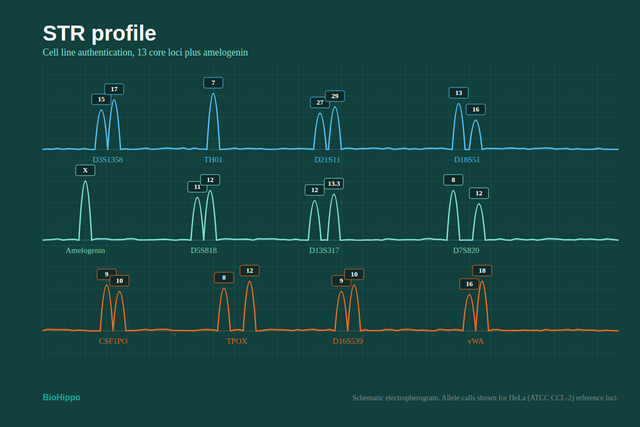 Application NoteCell Line Authentication and STR Profiling: Why Misidentified Cell Lines Still CirculateWhat STR profiling actually tests, how to read an allele table and a match score, when to authenticate, and what...
14 min read· Sep 2026
Application NoteCell Line Authentication and STR Profiling: Why Misidentified Cell Lines Still CirculateWhat STR profiling actually tests, how to read an allele table and a match score, when to authenticate, and what...
14 min read· Sep 2026
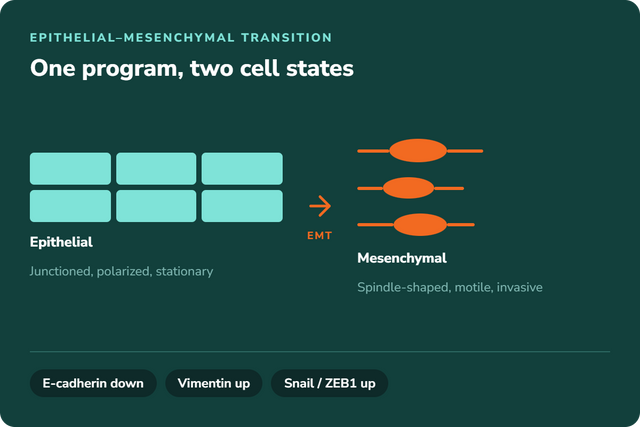 Application NoteEpithelial-Mesenchymal Transition (EMT) Explained: What It Does and When to Use ItThe EMT pathway, the epithelial cell markers and mesenchymal markers that define each state, the EMT transcription factors that drive...
12 min read· Sep 2026
Application NoteEpithelial-Mesenchymal Transition (EMT) Explained: What It Does and When to Use ItThe EMT pathway, the epithelial cell markers and mesenchymal markers that define each state, the EMT transcription factors that drive...
12 min read· Sep 2026
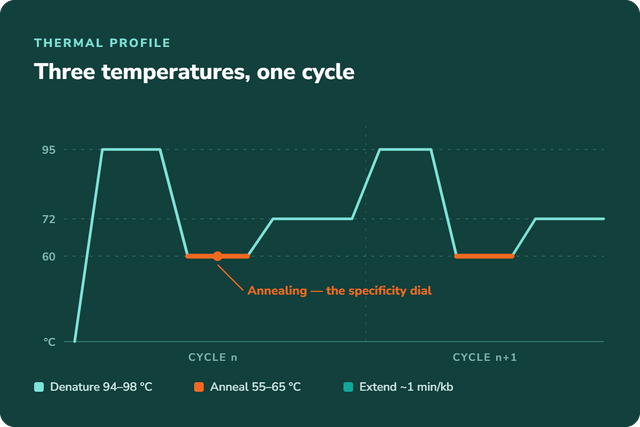 Application NoteUnderstanding PCR Optimization: A Researcher's PrimerA structured primer on PCR optimization: the five reaction levers in priority order, a converging experiment sequence, working parameter ranges,...
12 min read· Aug 2026
Application NoteUnderstanding PCR Optimization: A Researcher's PrimerA structured primer on PCR optimization: the five reaction levers in priority order, a converging experiment sequence, working parameter ranges,...
12 min read· Aug 2026
 PrimerSingle Cell RNA Sequencing Workflow: A Researcher's PrimerThe single cell RNA sequencing workflow explained stage by stage — the five principles it rests on, the seven bench...
14 min read· Aug 2026
PrimerSingle Cell RNA Sequencing Workflow: A Researcher's PrimerThe single cell RNA sequencing workflow explained stage by stage — the five principles it rests on, the seven bench...
14 min read· Aug 2026
Recently viewed
Recently viewed products
Try Celltrypse Free – Request Your Sample Today
Experience the power of Celltrypse™, c-LEcta's innovative enzyme solution for gentle and efficient cell dissociation. Request your free sample and discover a superior alternative for your cell culture workflows.

Try Celltrypse Free – Request Your Sample Today
Experience the power of Celltrypse™, c-LEcta's innovative enzyme solution for gentle and efficient cell dissociation. Request your free sample and discover a superior alternative for your cell culture workflows.
