

BEAVER Magnetic Separator Stand 50, shown with two tube positions for conical 50 mL centrifuge tubes and the magnet warning label on the base.

Magnetic Separator Stand 50, for 50 mL Conical Tubes
A permanent-magnet stand for conical 50 mL centrifuge tubes, generating a 4000 Gs field to pull superparamagnetic beads to the tube wall so the supernatant can be removed without centrifugation. The preparative-scale member of the BEAVER separator range, matched to 2 x 50 mL and larger bead volumes.
| Catalog No. | Size | Availability | Price | Qty | Order |
|---|---|---|---|---|---|
| 60203 | 1 stand | In Stock at Manufacturer | $1,600.00 |
|
Overview
What is Magnetic Separator Stand 50, for 50 mL Conical Tubes?
Product Overview
The Magnetic Separator Stand 50 holds conical 50 mL centrifuge tubes against a permanent magnet array, pulling superparamagnetic beads to the tube wall so the supernatant can be drawn off without centrifugation or filtration. It generates a field of 4000 Gs, which is what makes separation practical at 50 mL — the volume where a small-tube stand runs out of reach.
This is the preparative-scale member of the BEAVER separator range. It is the matching stand for protein purification at 2 × 50 mL and 4 × 250 mL bead volumes, and for nucleic acid extraction from large sample volumes.
How to use it
Place the tube in the stand, let it stand a few minutes until the beads are drawn to the wall and the solution clears, then remove the solution with a pipette. Separation time is not fixed: it depends on bead diameter — smaller beads take longer — and also on the viscosity and composition of your solution. Sub-micron beads in a viscous lysate can take several times longer than micron beads in buffer. An elongated pipette tip makes it easier to reach the bottom of a 50 mL tube without disturbing the pellet.
The separator range
Cat. 60201 Stand 2/15, for eight 1.5 mL or 2 mL tubes or two 15 mL tubes · Cat. 60203 Stand 50, for conical 50 mL tubes (this product) · Cat. 60302 Stand 96-I, for flat-bottom 96-well plates, 96-well PCR plates and 8/12-well strips · Cat. 60303 Stand 96-II, for 96-well PCR plates · Cat. 60304 Stand 96-III, for 96 deep-well plates · Cat. 60204 Magnetic Rod, for 200 mL to 2 L containers · Cat. 60401 Ring Magnetic Separator, for 250 mL flasks.
Safety — read before use
This is a strong permanent magnet, not an electromagnet. It cannot be switched off.
Keep it away from electronics, watches, magnetic storage media and any object sensitive to magnetic interference. Anyone with an implanted electronic device such as a cardiac pacemaker should maintain a safe distance of at least 50 cm. Prevent metal objects from being pulled onto the magnet — knives and other blades in particular, which can injure the operator on impact.
Do not disassemble the separator. Do not use it above 50 °C or in a strong external magnetic field. Strong acids, alkalis and organic solvents corrode it; avoid contact. Clean by wiping with a damp cloth and drying — not with alkaline solutions or detergents. Avoid prolonged sunlight or UV exposure. Store it in its box in a dry, cool place, and never leave it stuck to an iron plate or to another magnet. If the magnet works loose, stop using it and contact us for service.
For Research Use Only. Not for use in diagnostic or therapeutic procedures. Specifications are those published by the manufacturer, BEAVER Biomedical Engineering Co., Ltd.
Details
Specifications
Evidence
Validation & QC
Validation data for this product isn’t published yet.
Need specific QC or validation results — titer, purity, endotoxin, or assay data — for your application? Our scientific team can share what is available for this product and lot on request.
Request validation dataManufacturing
How it's made & quality control
Supplier quality control
Magnetic and functionalized beads are QC-tested for size uniformity, binding capacity and lot-to-lot consistency for reproducible separation and purification.
Product sheets provide bead size, surface chemistry, binding capacity and recommended protocols.
Certificate of Analysis provided per lot with binding-capacity data.
Supplier-level quality statement. For lot-specific results, request the Certificate of Analysis for your batch.
Questions
Frequently asked questions
Which separator do I need for my tubes?
Cat. 60201 Stand 2/15 takes eight 1.5 mL or 2 mL tubes, or two 15 mL tubes. Cat. 60203 Stand 50, this product, takes conical 50 mL tubes. For plates: 60302 fits flat-bottom 96-well plates, 96-well PCR plates and 8/12-well strips; 60303 fits 96-well PCR plates; 60304 fits 96 deep-well plates. Above 50 mL, use the Magnetic Rod (60204) for 200 mL to 2 L containers or the Ring Separator (60401) for 250 mL flasks.
How long does separation take?
There is no single number. It scales with bead diameter - smaller beads respond more slowly to the same field - and it is also affected by how viscous and how complex your solution is. Sub-micron beads in a crude lysate can take several times longer than micron beads in clean buffer. Watch for the solution to clear rather than timing it.
Is the magnet strong enough for 300 nm beads?
4000 Gs is a strong field for a manual stand, but sub-micron beads will still take noticeably longer than micron beads at 50 mL scale. Allow the extra time and confirm the supernatant is clear before you discard it.
Any safety issues I should know about?
Yes, and they are real rather than boilerplate. This is a permanent magnet that cannot be switched off. It will pull metal objects towards it hard enough to injure someone - blades in particular. Anyone with a pacemaker or other implanted electronic device should stay at least 50 cm away. It will also erase or damage magnetic media and disturb electronics and watches.
How do I look after it?
Store it in its box, dry and cool, and never leave it stuck to an iron surface or another magnet. Clean with a damp cloth and dry it - not detergent, not alkaline solution. Keep it away from strong acids, alkalis and organic solvents, out of prolonged sunlight, and below 50 C. Do not take it apart. If the magnet works loose, stop using it and contact us.
Why not just centrifuge?
For magnetic beads, centrifugation causes irreversible aggregation - most BEAVER bead datasheets prohibit it explicitly. Magnetic separation is the only correct way to pellet these products, which is why a separator is a required accessory rather than an optional one.
Answered by our team
Questions from researchers
No researcher questions have been answered for this product yet. Ask our technical team and we'll get back to you — approved answers are published here.
Ask our technical team
Reviewed by a scientist — typically answered within one business day.
Deals
Promotions
Codes apply at checkoutIn the literature
Research using this product
Every paper below mentions this product's catalogue number (or product name) in its full text — a text match, not a verified citation. Each entry shows what was measured, the sample type where the paper states it, and the sentence the catalogue number appears in, and a link to the figure showing that data — so you can confirm the use case before citing.
Auto-discovered from Europe PMC by manufacturer number / product name / keyword plus supplier. A match may reference a related product; confirm relevance before citing.
Customization
Sourcing & bulk orders
Related BEAVER separators and instruments available through BioHippo. Contact support@biohippo.com for scope and pricing.
- Tube separators: Cat. 60201 Stand 2/15 (1.5 / 2 / 15 mL).
- Plate separators: Cat. 60302 (96-well and strips), 60303 (96-well PCR), 60304 (96 deep-well).
- Large-volume separation: Cat. 60204 Magnetic Rod (200 mL to 2 L) and Cat. 60401 Ring Magnetic Separator (250 mL flask).
- Automated extraction: BeaverDevice Rosetta 24 (Cat. 91101) and Rosetta 32 (Cat. 91102).
- Dry bath incubator and modules: Cat. 2016C with modules 90101 to 90110.
Explore
Collections featuring this product
This product is included in the curated collections below. Browse a collection to source everything for a workflow from a single cart.
From the blog
Related articles & guides
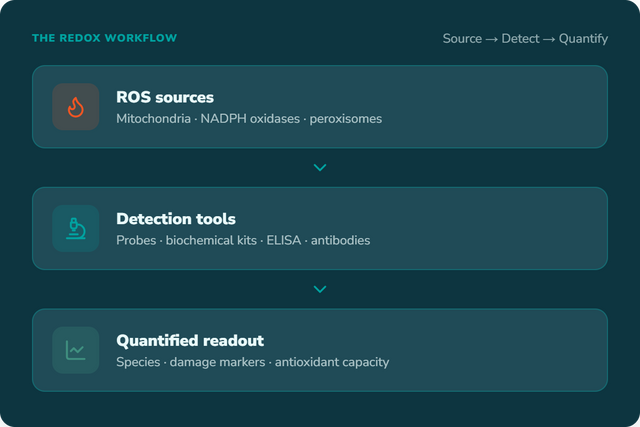 Application NoteReactive Oxygen Species Assay Tools: A Guide to Detecting ROS Across the Redox WorkflowA practical guide to reactive oxygen species assays — matching probes, ELISA kits, antibodies, enzymes, siRNA, and reporter cell lines...
11 min read· Jul 2026
Application NoteReactive Oxygen Species Assay Tools: A Guide to Detecting ROS Across the Redox WorkflowA practical guide to reactive oxygen species assays — matching probes, ELISA kits, antibodies, enzymes, siRNA, and reporter cell lines...
11 min read· Jul 2026
 Choosing Antibodies for Multiplex and Spatial Imaging PanelsHow to choose antibodies for multiplex immunofluorescence and spatial imaging panels: clone selection, fluorophore pairing, staining order, FFPE validation, cross-reactivity...
18 min read· Sep 2026
Choosing Antibodies for Multiplex and Spatial Imaging PanelsHow to choose antibodies for multiplex immunofluorescence and spatial imaging panels: clone selection, fluorophore pairing, staining order, FFPE validation, cross-reactivity...
18 min read· Sep 2026
 Application NoteWhy Are My Cells Dying? A Troubleshooting Guide to ApoptosisHow to tell apoptosis from necrosis, the six reasons cultures die, and how to confirm the mode of death with...
13 min read· Sep 2026
Application NoteWhy Are My Cells Dying? A Troubleshooting Guide to ApoptosisHow to tell apoptosis from necrosis, the six reasons cultures die, and how to confirm the mode of death with...
13 min read· Sep 2026
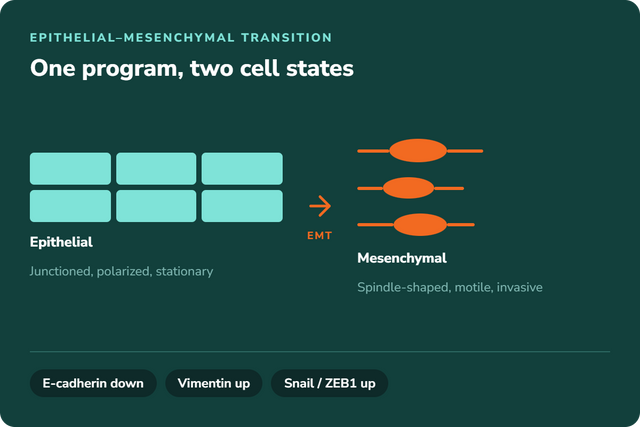 Application NoteEpithelial-Mesenchymal Transition (EMT) Explained: What It Does and When to Use ItThe EMT pathway, the epithelial cell markers and mesenchymal markers that define each state, the EMT transcription factors that drive...
12 min read· Sep 2026
Application NoteEpithelial-Mesenchymal Transition (EMT) Explained: What It Does and When to Use ItThe EMT pathway, the epithelial cell markers and mesenchymal markers that define each state, the EMT transcription factors that drive...
12 min read· Sep 2026
Recently viewed
Recently viewed products
Try Celltrypse Free – Request Your Sample Today
Experience the power of Celltrypse™, c-LEcta's innovative enzyme solution for gentle and efficient cell dissociation. Request your free sample and discover a superior alternative for your cell culture workflows.

Try Celltrypse Free – Request Your Sample Today
Experience the power of Celltrypse™, c-LEcta's innovative enzyme solution for gentle and efficient cell dissociation. Request your free sample and discover a superior alternative for your cell culture workflows.
