


BeaverBeads Stool DNA Kit
A magnetic bead kit for extracting genomic DNA from stool, recovering both host and intestinal flora DNA. The manufacturer reports over 2 ug of DNA from a 200 mg sample and 40-70% recovery depending on the sample. No phenol or chloroform, and available in a pre-filled plate format for automated platforms.
Choose Size.
Overview
What is BeaverBeads Stool DNA Kit?
Product Overview
The BeaverBeads™ Stool DNA Kit extracts genomic DNA from stool using superparamagnetic silica beads and pre-made buffers, recovering both host DNA and the DNA of the intestinal flora. Stool is one of the hardest matrices in molecular biology — it is rich in bile salts, polysaccharides and humic substances that carry through conventional preps and inhibit polymerases downstream — so the value of the kit is in the buffer chemistry rather than the bead alone.
The method uses no phenol and no chloroform. That removes a fume-hood requirement and a hazardous-waste stream from a protocol that is often run at high sample numbers.
Performance
Yield is reported at over 2 µg from a 200 mg sample. Recovery is stated at 40–70% depending on the sample — an honest range, because stool composition varies enormously between donors and diets. The manufacturer reports consistent Ct values across repeat extractions, and quantifies output on a Qubit fluorometer. Purified DNA is suitable for PCR amplification, sequencing and detection.
Formats
Two configurations are listed. The 100-reaction pack is the standard tube-format kit. The 32-reaction pack is supplied as a U-bottom pre-filled plate, where the buffers are already dispensed into the plate — intended for automated magnetic extraction platforms, where it removes the buffer-dispensing steps and the pipetting error that comes with them. Both run the same chemistry; choose by whether you work manually or on an instrument.
Applications
Gut microbiome profiling by 16S rRNA amplicon sequencing or shotgun metagenomics; detection of enteric pathogens by PCR and qPCR; host genomic DNA recovery from stool for colorectal cancer screening research; and any downstream assay that needs inhibitor-free DNA from a faecal matrix.
Handling and safety
Follow the wash and drying steps carefully. Residual ethanol carried into the eluate is the most common cause of failed downstream reactions with any magnetic-bead nucleic acid prep. Do not freeze the magnetic beads. A magnetic separator is required.
Biosafety note: stool is a potentially infectious material. Handle at the containment level your institution requires for human faecal samples, and treat all waste accordingly.
For Research Use Only. Not for use in diagnostic or therapeutic procedures. Specifications are those published by the manufacturer, BEAVER Biomedical Engineering Co., Ltd. A downloadable user manual for this catalogue number was not published at the time of listing; contact us if you need one before ordering.
Details
Specifications
Applications
Applications & how to use
PCR
Enzymatic amplification of a defined DNA target through repeated cycles of denaturation, primer annealing and extension. Success depends as much on template purity as on the polymerase, since carry-over ethanol, humic substances, haem and heparin all inhibit the reaction at concentrations far below what a spectrophotometer will flag.
qPCR
Real-time quantitative PCR, measuring amplification as it happens to determine starting template quantity from the Ct value. Because Ct is a relative measure, inhibitor carry-over shifts it without necessarily failing the reaction, which is why extraction chemistry and consistent input volume matter as much as the master mix.
Next-Generation Sequencing (NGS)
Massively parallel sequencing of a prepared library, used for whole-genome, targeted panel, amplicon and metagenomic work. Library preparation is unforgiving of low-quality input, so fragment integrity, accurate quantification and freedom from carry-over solvent are decided at the extraction step, not at the sequencer.
Evidence
Validation & QC
Validation data for this product isn’t published yet.
Need specific QC or validation results — titer, purity, endotoxin, or assay data — for your application? Our scientific team can share what is available for this product and lot on request.
Request validation dataManufacturing
How it's made & quality control
Supplier quality control
Magnetic and functionalized beads are QC-tested for size uniformity, binding capacity and lot-to-lot consistency for reproducible separation and purification.
Product sheets provide bead size, surface chemistry, binding capacity and recommended protocols.
Certificate of Analysis provided per lot with binding-capacity data.
Supplier-level quality statement. For lot-specific results, request the Certificate of Analysis for your batch.
Questions
Frequently asked questions
Why is stool DNA extraction harder than blood or tissue?
Because of what comes with the DNA. Stool carries bile salts, complex polysaccharides and humic substances that survive a naive prep and then inhibit polymerases in the downstream reaction. A stool-specific kit is really a wash-chemistry problem, not a binding problem - the beads are the easy part.
What is the difference between the 100-reaction and 32-reaction packs?
Format, not chemistry. The 100-reaction pack is standard tube format for manual work. The 32-reaction pack comes as a U-bottom pre-filled plate with the buffers already dispensed, intended for automated magnetic extraction platforms - it removes the buffer-dispensing steps and the pipetting error that goes with them.
How much DNA will I get?
Over 2 ug from a 200 mg sample, with recovery quoted at 40-70%. The wide recovery range is honest rather than evasive: stool composition varies enormously between donors and diets, and that variation shows up in yield. Validate on your own sample set before committing a study.
Does it recover microbial as well as host DNA?
Yes - the kit is described as extracting human and intestinal flora genomes together. For microbiome work that is what you want. If you need to enrich for one or the other, that is a separate depletion or enrichment step.
Does it use phenol or chloroform?
No. Neither is required, which removes a fume-hood requirement and a hazardous-waste stream from a protocol usually run at high sample numbers.
What is the most common reason a downstream PCR fails?
Carried-over ethanol from the wash step. Dry the beads properly before elution and remove any residual liquid with a small-volume pipette. This is true of every magnetic-bead nucleic acid prep, not just this one.
What safety precautions apply?
Stool is potentially infectious. Handle at whatever containment level your institution requires for human faecal samples, and treat consumables and liquid waste accordingly.
Answered by our team
Questions from researchers
No researcher questions have been answered for this product yet. Ask our technical team and we'll get back to you — approved answers are published here.
Ask our technical team
Reviewed by a scientist — typically answered within one business day.
Deals
Promotions
Codes apply at checkoutIn the literature
Research using this product
Every paper below mentions this product's catalogue number (or product name) in its full text — a text match, not a verified citation. Each entry shows what was measured, the sample type where the paper states it, and the sentence the catalogue number appears in, and a link to the figure showing that data — so you can confirm the use case before citing.
Auto-discovered from Europe PMC by manufacturer number / product name / keyword plus supplier. A match may reference a related product; confirm relevance before citing.
Customization
Customization & sourcing
Related BEAVER products available through BioHippo. Contact support@biohippo.com for scope and pricing.
- Other extraction kits: Circulating DNA (70404), Blood DNA (70403), Saliva DNA (70405), Viral DNA/RNA (70406), Tissue DNA, Bacterial Genomic DNA.
- NGS clean-up: DNA Select Isolation Kit (70407) for size selection; PCR-5G / 50G / 250G for PCR purification.
- Automated extraction: BeaverDevice Rosetta 24 (Cat. 91101) and Rosetta 32 (Cat. 91102), which the pre-filled plate format is designed for.
- Magnetic separator stands: Cat. 60302, 60303 and 60304 for 96-well and deep-well plates.
- OEM / ODM supply: BEAVER manufactures nucleic acid extraction kits at up to 50 million reactions per year.
Explore
Collections featuring this product
This product is included in the curated collections below. Browse a collection to source everything for a workflow from a single cart.
From the blog
Related articles & guides
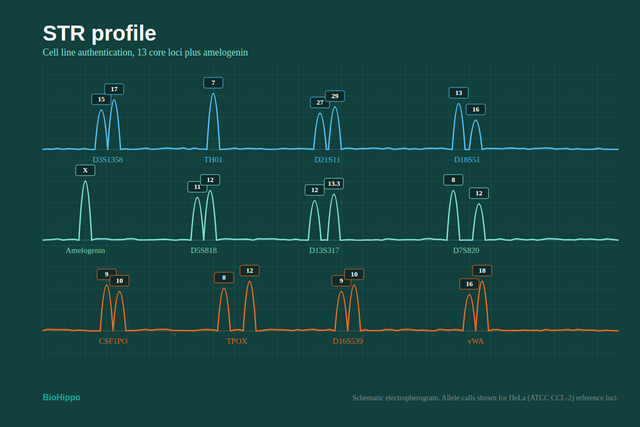 Application NoteCell Line Authentication and STR Profiling: Why Misidentified Cell Lines Still CirculateWhat STR profiling actually tests, how to read an allele table and a match score, when to authenticate, and what...
14 min read· Sep 2026
Application NoteCell Line Authentication and STR Profiling: Why Misidentified Cell Lines Still CirculateWhat STR profiling actually tests, how to read an allele table and a match score, when to authenticate, and what...
14 min read· Sep 2026
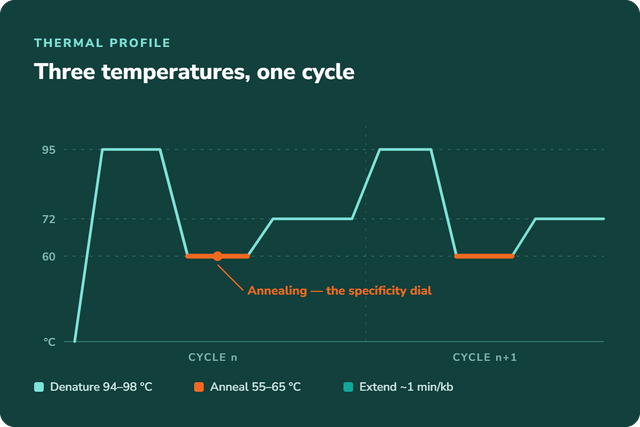 Application NoteUnderstanding PCR Optimization: A Researcher's PrimerA structured primer on PCR optimization: the five reaction levers in priority order, a converging experiment sequence, working parameter ranges,...
12 min read· Aug 2026
Application NoteUnderstanding PCR Optimization: A Researcher's PrimerA structured primer on PCR optimization: the five reaction levers in priority order, a converging experiment sequence, working parameter ranges,...
12 min read· Aug 2026
 PrimerSingle Cell RNA Sequencing Workflow: A Researcher's PrimerThe single cell RNA sequencing workflow explained stage by stage — the five principles it rests on, the seven bench...
14 min read· Aug 2026
PrimerSingle Cell RNA Sequencing Workflow: A Researcher's PrimerThe single cell RNA sequencing workflow explained stage by stage — the five principles it rests on, the seven bench...
14 min read· Aug 2026
 Residual Host Cell DNA Testing by qPCR: Method and Kit Selection GuideResidual host cell DNA testing controls two variables at once — mass per dose and fragment length. A practical guide...
13 min read· Aug 2026
Residual Host Cell DNA Testing by qPCR: Method and Kit Selection GuideResidual host cell DNA testing controls two variables at once — mass per dose and fragment length. A practical guide...
13 min read· Aug 2026
Recently viewed
Recently viewed products
Try Celltrypse Free – Request Your Sample Today
Experience the power of Celltrypse™, c-LEcta's innovative enzyme solution for gentle and efficient cell dissociation. Request your free sample and discover a superior alternative for your cell culture workflows.

Try Celltrypse Free – Request Your Sample Today
Experience the power of Celltrypse™, c-LEcta's innovative enzyme solution for gentle and efficient cell dissociation. Request your free sample and discover a superior alternative for your cell culture workflows.
