

BeaverBeads Streptavidin magnetic beads as supplied by BEAVER Biomedical Engineering.

BeaverBeads Streptavidin Magnetic Beads, 2 um
Superparamagnetic 2 um beads with covalently coupled streptavidin, supplied at 10 mg/mL. Capture any biotinylated antibody, antigen, protein or oligonucleotide through the streptavidin-biotin bond (Kd about 10-15 M). Binds at least 350 pmol of biotinylated 24-nt oligonucleotide and 15 ug of biotinylated IgG per mg of beads.
Choose Size.
Overview
What is BeaverBeads Streptavidin Magnetic Beads, 2 um?
Product Overview
BeaverBeads™ Streptavidin are superparamagnetic microspheres with streptavidin covalently coupled to the bead surface. The streptavidin–biotin interaction has a dissociation constant of about 10−15 M, among the strongest non-covalent bonds in biology, which makes it the standard way to capture anything that can be biotinylated: antibodies, antigens, oligonucleotides, proteins and peptides.
Because the ligand is attached covalently rather than adsorbed, it does not leach during washes. The beads are uniform in size and regular in shape, which gives predictable magnetic separation times and makes them suitable for automated, high-throughput platforms as well as manual work.
Binding capacity at 2 µm
Biotinylated single-stranded oligonucleotide (24 nt): ≥350 pmol per mg of beads. Biotinylated IgG: ≥15 µg per mg of beads. Supplied at 10 mg/mL.
Within the BeaverBeads Streptavidin family, oligonucleotide capacity is highest at the small end — 450 pmol/mg at both 300 nm and 1 µm, 350 pmol/mg at 2 µm, 300 pmol/mg at 5 µm. The 2 µm bead is the usual compromise: enough capacity for most capture work, with fast, clean magnetic pelleting that sub-micron beads cannot match.
Applications
Immunoassay and chemiluminescence. Used as the solid phase in magnetic particle chemiluminescence immunoassay (CLIA) and ELISA, capturing a biotinylated capture antibody. The manufacturer's manual gives a complete CLIA protocol using 50 µL of beads per well of a 96-well plate with 15-minute incubations at 37 °C.
Nucleic acid work. Isolation of nucleic acids, preparation of nucleic acid probes, and hybridisation capture of DNA and RNA using biotinylated probes.
Protein–nucleic acid interaction. Biotinylated DNA or RNA fragments immobilised on the beads are used to pull down and identify the proteins that bind them.
Also used for immunoprecipitation, cell sorting and phage display screening.
Coupling your biotinylated ligand
The manufacturer's procedure washes the beads three times, then incubates them with the biotinylated antibody or protein at a bead concentration of 1 mg/mL for 30 minutes at room temperature on a rotating mixer, followed by five washes. The full protocol is in the user manual under Documents.
Handling and safety
Do not freeze or dry the beads. Vortex for about 20 seconds to a uniform suspension before every use. A magnetic separator is required. The preservative contains ProClin-300 and BSA; if either interferes with your assay, wash the beads into your own buffer before starting. Keep beads and separators away from metal objects, electronic devices and implanted electronic devices such as cardiac pacemakers.
For Research Use Only. Not for use in diagnostic or therapeutic procedures. Specifications are those published by the manufacturer, BEAVER Biomedical Engineering Co., Ltd.
Details
Specifications
Applications
Applications & how to use
Immunoprecipitation (IP)
Enriches a target protein and its interacting partners from lysate using an antibody coupled to beads. Used for interaction studies and downstream WB or MS.
ELISA
Quantifies a soluble analyte using antibody capture and enzyme-linked detection on a microplate, giving concentration readouts against a standard curve.
Protein Interaction
Detects and quantifies binding between a protein and a partner molecule, whether another protein, a nucleic acid, a lipid or a small molecule. Readouts range from gel shift and pull-down to fluorescence and label-free biophysics, and are used to confirm complex formation and measure affinity.
Chemiluminescence Immunoassay (CLIA)
Immunoassay read by light emitted from an enzymatic or direct chemiluminescent label, giving wider dynamic range and lower detection limits than colorimetric ELISA. Magnetic microspheres are the usual solid phase, so bead uniformity and low non-specific binding translate directly into assay sensitivity and reproducibility.
Cell Separation
Isolation of a defined cell population from a mixed suspension, most often by antibody-coated magnetic beads in positive or negative selection format. Negative selection leaves the target untouched by antibody, which is preferred when downstream function or receptor availability could be affected by bead binding.
Evidence
Validation & QC
Validation data for this product isn’t published yet.
Need specific QC or validation results — titer, purity, endotoxin, or assay data — for your application? Our scientific team can share what is available for this product and lot on request.
Request validation dataManufacturing
How it's made & quality control
Supplier quality control
Magnetic and functionalized beads are QC-tested for size uniformity, binding capacity and lot-to-lot consistency for reproducible separation and purification.
Product sheets provide bead size, surface chemistry, binding capacity and recommended protocols.
Certificate of Analysis provided per lot with binding-capacity data.
Supplier-level quality statement. For lot-specific results, request the Certificate of Analysis for your batch.
Questions
Frequently asked questions
Which bead size should I choose?
Oligonucleotide capacity is highest at the small end of the family: 450 pmol/mg at 300 nm and 1 um, 350 pmol/mg at 2 um, 300 pmol/mg at 5 um. Biotinylated IgG capacity is 15 ug/mg at 300 nm, 1 um and 2 um, dropping to 5 ug/mg at 5 um. The 2 um bead is the usual compromise - good capacity with fast, clean magnetic pelleting. Go to 300 nm only if you need the extra oligo capacity and can accept slower separation.
Is the streptavidin covalently attached?
Yes. BEAVER couples it covalently to the bead surface rather than adsorbing it, so it does not leach during washes. That matters most in multi-step assays with many wash cycles.
What can I capture?
Anything biotinylated - antibodies, antigens, proteins, peptides, single- or double-stranded oligonucleotides. The streptavidin-biotin bond has a Kd of roughly 10-15 M, so under physiological conditions the capture is effectively irreversible. If you need to release the target, plan an alternative elution route or use a cleavable biotin linker.
How do I couple my biotinylated ligand?
Wash the beads three times, then incubate them at 1 mg/mL with your biotinylated antibody or protein for 30 minutes at room temperature on a rotating mixer, then wash five times. The full protocol, including a complete magnetic-particle chemiluminescence assay procedure, is in the manual.
Will BSA in the storage buffer interfere with my assay?
It can. The preservative is 1x PBS with 0.1% BSA and 0.1% ProClin-300. BSA blocks non-specific sites, which is usually helpful, but if your detection or your ligand chemistry is sensitive to it, wash the beads into your own buffer before starting.
Are they suitable for automation?
Yes. The beads are uniform in size and regular in shape, which gives reproducible separation times, and BEAVER states the product can be run on automated high-throughput equipment.
Answered by our team
Questions from researchers
No researcher questions have been answered for this product yet. Ask our technical team and we'll get back to you — approved answers are published here.
Ask our technical team
Reviewed by a scientist — typically answered within one business day.
Deals
Promotions
Codes apply at checkoutIn the literature
Research using this product
Every paper below mentions this product's catalogue number (or product name) in its full text — a text match, not a verified citation. Each entry shows what was measured, the sample type where the paper states it, and the sentence the catalogue number appears in, and a link to the figure showing that data — so you can confirm the use case before citing.
Auto-discovered from Europe PMC by manufacturer number / product name / keyword plus supplier. A match may reference a related product; confirm relevance before citing.
Customization
Customization & add-ons
BEAVER manufactures streptavidin magnetic beads at scale and supports OEM and ODM supply for immunoassay manufacturers. Contact support@biohippo.com for scope and pricing.
- Other sizes in the family: 300 nm (22308), 1 um (22307), 5 um (22306), 2.8 um (22309), 3 um (22311).
- Magrose Streptavidin: agarose-matrix streptavidin beads at 10-30 um (22321) for lower background in manual workflows.
- Bulk volumes: beyond the 100 mL catalogue pack, at production scale.
- Pre-coupled beads: your biotinylated antibody or probe immobilised by the manufacturer.
- OEM / ODM supply: for chemiluminescent immunoassay and diagnostic kit manufacturers.
Explore
Collections featuring this product
This product is included in the curated collections below. Browse a collection to source everything for a workflow from a single cart.
From the blog
Related articles & guides
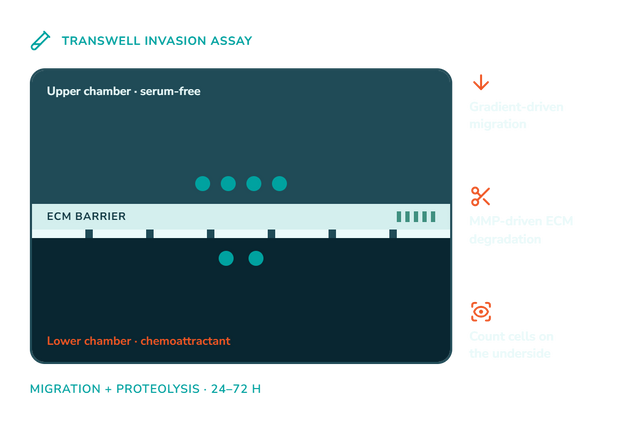 Application NoteInvasion Assays: A Step-by-Step Experimental WorkflowHow to plan, run and quantify in vitro cell migration and invasion assays: choosing between scratch, chemotaxis, transwell invasion and...
12 min read· Sep 2026
Application NoteInvasion Assays: A Step-by-Step Experimental WorkflowHow to plan, run and quantify in vitro cell migration and invasion assays: choosing between scratch, chemotaxis, transwell invasion and...
12 min read· Sep 2026
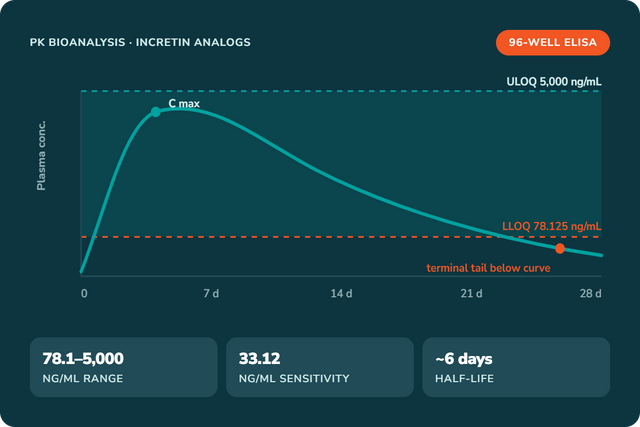 Application NoteQuantifying Retatrutide and Related Incretin Analogs by ELISA in Preclinical PK StudiesHow to select a drug-specific retatrutide ELISA kit and qualify it in your own matrix and species for preclinical pharmacokinetic...
10 min read· Sep 2026
Application NoteQuantifying Retatrutide and Related Incretin Analogs by ELISA in Preclinical PK StudiesHow to select a drug-specific retatrutide ELISA kit and qualify it in your own matrix and species for preclinical pharmacokinetic...
10 min read· Sep 2026
 Streptavidin Magnetic Beads: How They Work, Protocol, and How to ChooseStreptavidin magnetic beads bind any biotinylated antibody, oligo, or protein — a universal capture handle for pull-down, IP, and nucleic-acid...
9 min read· Jul 2026
Streptavidin Magnetic Beads: How They Work, Protocol, and How to ChooseStreptavidin magnetic beads bind any biotinylated antibody, oligo, or protein — a universal capture handle for pull-down, IP, and nucleic-acid...
9 min read· Jul 2026
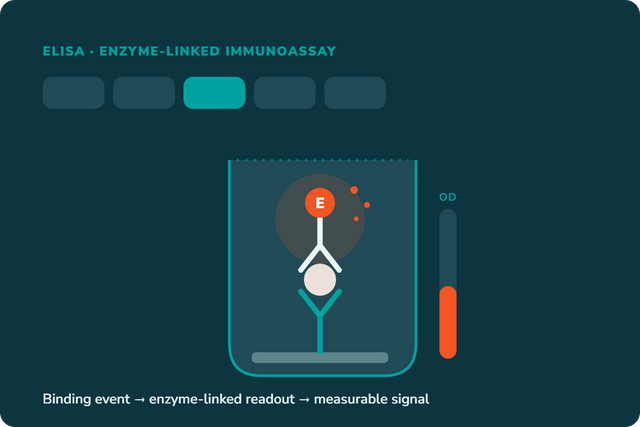 Application NoteTypes of ELISA: Choosing the Right FormatA format-by-format guide to the main types of ELISA — sandwich, competitive, indirect, direct, capture, bridging, high-sensitivity and QuickTest —...
9 min read· Jul 2026
Application NoteTypes of ELISA: Choosing the Right FormatA format-by-format guide to the main types of ELISA — sandwich, competitive, indirect, direct, capture, bridging, high-sensitivity and QuickTest —...
9 min read· Jul 2026
Recently viewed
Recently viewed products
Try Celltrypse Free – Request Your Sample Today
Experience the power of Celltrypse™, c-LEcta's innovative enzyme solution for gentle and efficient cell dissociation. Request your free sample and discover a superior alternative for your cell culture workflows.

Try Celltrypse Free – Request Your Sample Today
Experience the power of Celltrypse™, c-LEcta's innovative enzyme solution for gentle and efficient cell dissociation. Request your free sample and discover a superior alternative for your cell culture workflows.
